Skip to content
The Institute of Transportation Studies at UC Irvine
  • About
    • Leadership
    • Affiliated Centers
    • IT Resources
    • ITS-Irvine Policies
    • Contact
  • Research
    • Areas of Expertise
    • Publications
    • Projects
    • Requests for Proposals
    • TRIP Program
    • PRIME Program
  • Education
  • People
    • Researchers
    • Administrative Staff
    • Current Students
    • PhD Graduates
    • Past Faculty Associates
  • News & Events
    • News
    • Events
  • About
    • Leadership
    • Affiliated Centers
    • IT Resources
    • ITS-Irvine Policies
    • Contact
  • Research
    • Areas of Expertise
    • Publications
    • Projects
    • Requests for Proposals
    • TRIP Program
    • PRIME Program
  • Education
  • People
    • Researchers
    • Administrative Staff
    • Current Students
    • PhD Graduates
    • Past Faculty Associates
  • News & Events
    • News
    • Events

Sponsor: PTA

Do Compact, Accessible, and Walkable Communities Promote Gender Equality?

Status

Complete

Project Timeline

January 1, 2017 - December 31, 2017

Principal Investigator

Doug Houston

Sponsor, Program & Award Number

PTA: 2017-22
(Also see the UC ITS page)

Areas of Expertise

Travel Behavior, Land Use, & the Built Environment

Team Departmental Affiliation

Urban Planning and Public Policy

Project Summary

GPS-based activity and travel diary surveys have been increasingly used to assess whether transportation and sustainability strategies for compact, mixed-use, and transit accessible communities result in reduced vehicle travel, reduced greenhouse gas emissions, greater opportunities for physical activity, and enhanced accessibility. For instance, the Southern California’s long range plan indicates over 50% of new jobs and housing will be located in high-quality transit corridors, and the Los Angeles Metropolitan Transportation Authority (LA Metro) is currently aggressively expanding its rail transit network, but few studies have examined the impacts of such investments on travel and spatial activity patterns. This study provides insights into the impact of rail transit investments and compact development policies. This component examines California Household Travel Survey (CHTS) data to examine whether more compact, mixed-use and transit accessible areas are associated with greater gender equality in the geographic extent of activity-travel patterns given previous research that suggests compact design may help reduce gender differences in the division of household tasks including errands and “chauffeuring travel”.  

Related Publications

policy brief | Jun 2019

Compact, Accessible, and Walkable Communities Help Support Gender Equality

Read more
research report | Mar 2018

Do Compact, Accessible, and Walkable Communities Promote Gender Equality?

Read more

The Effect of Trucks Dispatch Decisions on Pavement Damage and Other Externalities

Status

Complete

Project Timeline

January 1, 2017 - December 31, 2017

Principal Investigator

Linda Cohen

Project Team

Kevin Roth

Sponsor, Program & Award Number

PTA: 2017-34
(Also see the UC ITS page)

Areas of Expertise

Freight, Logistics, & Supply Chain Transportation Economics, Funding, & Finance

Team Departmental Affiliation

Economics

Project Summary

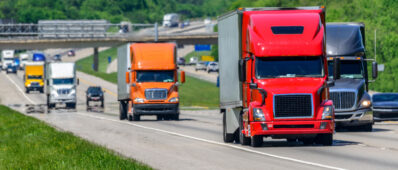
Problem Statement: To reduce carbon emissions as part of AB 32, California has implemented cap-and-trade policies that raise the price of diesel fuel. The increase in fuel cost provides an incentive for shippers to maximize truck loading and increase total truck weight, which generates more road damage. No prior studies have quantified these damages. Proposal:  UC Irvine researchers will use the state’s 1.2 billion data points on truck weight to quantify the effects of diesel prices on vehicle weight and road damage. Using sophisticated statistical analyses, the relationship between diesel prices and vehicle weight from other potentially confounding factors such as GDP growth and trends will be disentangled. While preliminary state-level analysis has been completed, this research will drill down into these results identify where in the state the effects are most pronounced, to better classify the types of vehicles on the road and their relative contributions to road damage, and to increase the sophistication of our policy simulations. Much of this requires better decoding of the data to fully describe the vehicles in the data. Analysis will be performed detector by detector to enable a characterization of effects based on the proximity to, for example, urban/agricultural areas, intermodal facilities, and ports.  Expected Impact and Benefits:  This research will provide policymakers with information on the effects of fuel taxes on roadway damage that can be considered in taxing and funding decisions.  Preliminary results suggest that for a given diesel tax increase, 10 percent of the revenue is eroded by increased infrastructure damage. Conversely, because efficiency standards on trucks reduce per-mile costs, they serve as an incentive to down-weight vehicles.  Simple simulations reveal that over a wide range of parameters, a given level of carbon emissions and oil use reductions are more efficiently achieved through fuel efficiency standards than through diesel taxation. This suggests that the optimal policies to reduce carbon from freight trucks, one of the least-regulated carbon emitting markets, are likely to be different than that for automobiles. Furthermore, because trucks are responsible for nearly all user damage to highways, freight truck policy has the potential to generate large, unanticipated costs for agencies responsible for maintaining roads.

Related Publications

policy brief | Aug 2020

A Higher Diesel Tax Increases Road Damage

Read more
research report | Jun 2017

The Effect of Trucks Dispatch Decisions on Pavement Damage and Other Externalities

Read more
policy brief | Aug 2020

A Higher Diesel Tax Increases Road Damage

Read more

An Analysis of Travel Characteristics of Carless Households in California

Status

Complete

Project Timeline

January 1, 2017 - December 31, 2017

Principal Investigator

Jean-Daniel Saphores

Project Team

Suman Mitra

Sponsor, Program & Award Number

PTA: 2017-32
(Also see the UC ITS page)

Areas of Expertise

Travel Behavior, Land Use, & the Built Environment

Team Departmental Affiliation

Civil and Environmental Engineering

Project Summary

Problem Statement: Compared to mobile households, mobility-impaired households are at a disadvantage for accessing employment, educational, social, and recreational opportunities. Currently, around 10.5 million US households do not own cars (according to American Community Survey data); in California, approximately 8% of households do not have cars. These households, which are often neglected in transportation policy discussions, can be organized into two groups: “involuntary” and “voluntary”. Understanding the travel behavior of households that voluntarily decided to forgo cars is important for informing policies that aim to reduce dependency on cars and greenhouse gas emissions. Understanding the travel pattern of involuntary carless households is no less important as these households are at greater risk of physical isolation, poor access, and social exclusion. Unfortunately, knowledge of travel behavior of carless households is lacking.  Proposal: This research will shed some light on the travel behavior of voluntary and involuntary carless households in California by analyzing data from the 2012 California Household Travel Survey (CHTS). Researchers will analyze both travel diaries and GPS data to characterize the trip patterns of voluntary and involuntary carless households and contrast their trips with those of households with vehicles. Researchers will then estimate mode choice and create generalized Structural Equation Models (GSEM) to assess the effects of various socioeconomic and built environment variables on travel behavior. Expected Impact and Benefits: This research will be of interest to transit and planning agencies throughout California, and to public and private organizations fighting poverty and social exclusion. The results of this research will provide a better understanding of how to reduce the dependence on motor vehicles by examining households who are voluntarily carless. It will also inform policies designed to help poor households who are mobility impaired.

Related Publications

published journal article | Dec 2020

How do they get by without cars? An analysis of travel characteristics of carless households in California
Transportation

Read more
research report | May 2018

An Analysis of Travel Characteristics of Carless Households in California

Read more
published journal article | Nov 2019

Carless in california: What the carless can tell us about shifting behaviors and improving mobility
Transfers Magazine

Read more
conference paper | Jan 2018

Carless in car heaven: A comparison of German and Californian households
Proceedings of the 97th annual meeting of the transportation research board

Read more
published journal article | Dec 2017

Carless in California: Green choice or misery?
Journal of Transport Geography

Read more
policy brief | May 2020

Travel Varies Greatly Between Voluntary Versus Involuntary Carless Households in California

Read more

Network-wide Truck Tracking and Weight Estimation

Status

Complete

Project Timeline

January 1, 2017 - December 31, 2017

Principal Investigator

Stephen Ritchie

Project Team

Kyung (Kate) Hyun

Sponsor, Program & Award Number

PTA: 2017-36
(Also see the UC ITS page)

Areas of Expertise

Freight, Logistics, & Supply Chain Intelligent Transportation Systems, Emerging Technologies, & Big Data

Team Departmental Affiliation

Civil and Environmental Engineering

Project Summary

Problem Statement: Recent advancements in statewide freight modeling and commercial vehicle activity data collection programs in California have led to the need for more advanced methods of truck data collection across the state. However, the commercial vehicle count data needed for the California Statewide Freight Forecasting Model (CSFFM) developed for Caltrans or the California Vehicle Activity Database (CalVAD) managed by the California Air Resources Board (CARB) are either missing or expensive to obtain from current data resources.  Moreover, the recent development of the statewide Truck Activity Monitoring System (TAMS) by ITS-Irvine researchers shows that dynamic truck activity data in a complex road network has great potential for freight modeling, truck monitoring and emissions estimation, because trucks possess distinct travel patterns that are affiliated with industries and facilities.  Paired with truck weight and detailed body classification data, truck activity data can further indicate the efficiency of various industries in minimizing resource-wasting empty truck movements. However, despite the need for comprehensive truck weight data, the current methods for collecting such data are only limited to existing weigh-in-motion (WIM) sites. Proposal: This study proposes the extension of existing link-based truck tracking developed at ITS-Irvine to network-wide truck tracking across multiple detector stations along different truck corridors to estimate the path flow of trucks, by utilizing the existing inductive loop detector (ILD) infrastructure.  Since ILDs collect temporally continuous real-time traffic data for the full population of trucks traveling a given route, the network-wide tracking framework will facilitate the understanding of spatial and temporal truck flow patterns.  This proposed system provides collateral benefits to an advanced truck classification model recently developed at ITS-Irvine using the fusion of ILD and WIM technologies.  The combination of these two systems has the potential to provide detailed tracking of commercial vehicles by their body configuration and industrial affiliation to yield a comprehensive data source of detailed truck activity.  In addition to network truck tracking, this study will also investigate the estimation of truck gross vehicle weight (GVW) distributions at non-WIM locations to facilitate more accurate emissions estimations.  Therefore, this study proposes a cost-effective approach to estimate weights through the use of tracked truck flows by spatially interpolating weight distributions obtained from neighboring WIM sites to detector sites that are used for truck tracking. Expected Impact and Benefits: The expected modeling outcomes will be valuable for estimating greenhouse gas (GHG) estimations and in guiding policies towards the reduction of GHGs (SB 32, SB 350).  Specifically, CARB and CEC will benefit from improved emissions estimation through the availability of a finer spatial resolution of GVW distributions for heavy-heavy duty trucks (HHDT).  The outcomes of the proposed network vehicle tracking model are expected to support pilot projects of the California Sustainable Freight Action Plan by monitoring detailed truck activity along major truck corridors with advanced measures such as travel time and average delays by truck vocation (AB32, AB 2170).

Related Publications

research report | Aug 2017

New Methods for Monitoring Spatial Truck Travel Patterns in California Using Exisiting Dectector Infrastructure

Read more

Linking Statewide and Regional Travel Models to Estimate Interregional Travel Impacts in California

Status

In Progress

Project Timeline

October 1, 2016 - June 30, 2024

Principal Investigator

Michael McNally

Sponsor, Program & Award Number

PTA: 2017-23
(Also see the UC ITS page)

Areas of Expertise

Travel Behavior, Land Use, & the Built Environment

Team Departmental Affiliation

Civil and Environmental Engineering

Project Summary

Metropolitan Planning Organizations (MPOs) use regional travel forecasting models to estimate vehicle trips (VT), average speeds, and vehicle miles traveled (VMT), which serve in turn as input to regional emission models. Interregional travel is not usually part of MPO models, but it is explicitly part of statewide models. The California Statewide Travel Demand Model (CSTDM) is an activity-based model that produces statewide origin-destination trip tables for assignment to the statewide network. Consistency tests, however, suggest that there are significant deviations between link counts from the CSTDM and those from regional models, as measured at defined cordon stations. These trip counts are, by definition, interregional travel – travel that is typically generated within a region but with performance impacts in another region or in areas not formally part of a defined region. The proposed project seeks to develop and test methods to synchronize the travel forecasting results of the CSTDM with regional travel forecasting models, with the objective of better estimating interregional travel and greenhouse gas emissions in California. Whether trip-, tour-, or activity-based, CSTDM and all current regional models apply conventional trip assignment as the last step in the modeling process. From the perspective of potential policies to address performance impacts, this study will resolve how regions and the state properly account for the relative proportion of interregional travel and the associated travel impacts. The methodological problem is to synchronize the assigned and validated cordon counts produced by regional models with those generated as part of assignment in the CSTDM. Techniques to modify origin-destination trip tables exist but applications above the local area have been rare. The CSTDM trip tables will be updated to reflect the assigned counts at defined MPO cordon stations. At least two methods will be tested using Caltrans’ Performance Measurement System (PeMS) data with CSTDM trip tables and using MPO cordon estimates with CSTDM trips tables. Each method will be evaluated, with one selected for final application based on its consistency across all model levels and data sources.

Posts navigation

Newer posts
When autocomplete results are available use up and down arrows to review and enter to go to the desired page. Touch device users, explore by touch or with swipe gestures.

Recent Posts

  • Research in Motion: Evaluating Equity in Transportation and Hazard Preparedness Plans: A Multi-Level Governance Approach
  • Research in Motion: Using a “Bathtub Model” to Analyze Travel Can Protect Privacy While Providing Valuable Insights
  • Research in Motion: The Missing Link in Automated Vehicle Safety: Projected Braking and Realistic Driving Behavior
  • PRIME Alumni Spotlight: Miles Shaffie
  • TRIP Alumni Spotlight: Sara-Grace Lien

Recent Comments

No comments to show.

Archives

  • November 2025
  • October 2025
  • September 2025
  • August 2025
  • July 2025
  • June 2025
  • May 2025
  • February 2025
  • January 2025
  • October 2024
  • September 2024
  • August 2024
  • July 2024
  • June 2024
  • May 2024
  • April 2024
  • February 2024
  • December 2023
  • November 2023
  • September 2023
  • April 2023
  • November 2022
  • October 2022
  • September 2022
  • May 2022
  • April 2022
  • March 2022
  • February 2022
  • January 2022
  • November 2021
  • October 2021
  • August 2021
  • April 2021
  • January 2021
  • December 2020
  • November 2020
  • August 2020
  • July 2020
  • June 2020
  • May 2020
  • April 2020
  • March 2020
  • February 2020
  • January 2020
  • December 2019
  • November 2019
  • May 2019
  • April 2019
  • February 2019
  • January 2019
  • December 2018
  • November 2018
  • October 2018
  • September 2018
  • May 2018
  • April 2018
  • March 2018
  • February 2018
  • January 2018

Categories

  • Award
  • News
  • Research in Motion
  • Spotlight

Anteater Instruction and Research Bldg (AIRB)
Irvine, CA 92697
Phone: 949-824-5989 | Fax: 949-824-8385

  • linkedin
Subscribe to the ITS- Irvine mailing list Subscribe to Events Calendar

About

  • Leadership
  • Affiliated Centers
  • ITS-Irvine Policies
  • Contact Us

Research

  • Areas of Expertise
  • Publications
  • Projects
  • Requests for Proposals

People

  • Researchers
  • Administrative Staff
  • Current Students
  • PhD Graduates
  • Past Faculty Associates

Press

  • News
  • Events

©2025 ITS-Irvine