Abstract
Abstract: Connected vehicles (CVs), acting as mobile sensors or probe vehicles, offer new opportunities to support traffic monitoring and control without relying on fixed roadside detectors. Yet during the long transition toward full connectivity, the CV penetration rate remains a critical input for reconstructing complete traffic information from partial observations, while its uncertainty can directly affect downstream intelligent transportation system applications. This seminar presents two analytical approaches: the single-source data penetration rate estimation (SSDPRE) method for estimating average CV penetration and the probabilistic penetration rate (PPR) model for quantifying its uncertainty. Both methods rely solely on CV data, produce unbiased estimates, and effectively allow CVs to function as pseudo-detectors across the transportation network. Their practical utility is demonstrated through a stochastic adaptive signal control framework for detector-free intersections over the full range of CV penetration rates. The estimated penetration rate is used to infer expected vehicle arrival rates, while its uncertainty is translated into uncertain arrival rates. The controller then minimises expected total junction delay on a cycle-by-cycle basis by explicitly accounting for these uncertainties, demonstrating the potential for efficient and reliable adaptive signal control under partial connectivity even when fixed detectors are unavailable.
Speaker
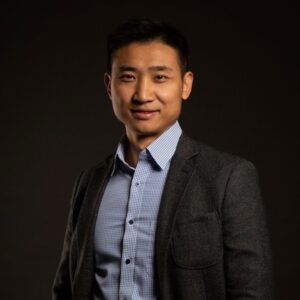
Dr. Wai Wong is a Senior Lecturer in the Department of Civil and Environmental Engineering at the University of Canterbury, New Zealand. He received his Ph.D. in Transportation and Traffic Engineering and B.Eng. in Civil Engineering with first-class honours from The University of Hong Kong, and subsequently worked as a postdoctoral research fellow at the University of Michigan. His research interests include traffic flow theory, big data analytics, connected and automated vehicles, intelligent transportation systems, traffic signal optimisation, and emergency transportation and evacuation. His work has been published in leading international journals, including Transportation Science, Transportation Research Part B, and Transportation Research Part C, and presented at prestigious international conferences, including ISTTT. Dr. Wong serves on the editorial boards of Transportmetrica A, Transportmetrica B, and the Journal of Intelligent Transportation Systems, and has served as a guest editor for Transportation Research Part A and Transportmetrica B. His research has been supported by multiple funding agencies, including New Zealand’s Ministry of Business, Innovation and Employment, the Royal Society of New Zealand, and Hong Kong’s University Grants Committee.