Skip to content
The Institute of Transportation Studies at UC Irvine
  • About
    • Leadership
    • Affiliated Centers
    • IT Resources
    • ITS-Irvine Policies
    • Contact
  • Research
    • Areas of Expertise
    • Publications
    • Projects
    • Requests for Proposals
    • TRIP Program
    • PRIME Program
  • Education
  • People
    • Researchers
    • Administrative Staff
    • Current Students
    • PhD Graduates
    • Past Faculty Associates
  • Support Us
  • News & Events
    • News
    • Events
  • About
    • Leadership
    • Affiliated Centers
    • IT Resources
    • ITS-Irvine Policies
    • Contact
  • Research
    • Areas of Expertise
    • Publications
    • Projects
    • Requests for Proposals
    • TRIP Program
    • PRIME Program
  • Education
  • People
    • Researchers
    • Administrative Staff
    • Current Students
    • PhD Graduates
    • Past Faculty Associates
  • Support Us
  • News & Events
    • News
    • Events

Sponsor: CARB

Development of a New Methodology to Characterize Truck body Types Along California Freeways

Status

Complete

Project Timeline

April 1, 2012 - March 29, 2016

Principal Investigator

Stephen Ritchie

Project Team

Kyung (Kate) Hyun, Andre (Yeow Chern) Tok, Sarah Hernandez, Arthur Chanprakrit, Tiffany Giordano, Jun Park

Sponsor & Award Number

CARB: 11-316

Areas of Expertise

Freight, Logistics, & Supply Chain Infrastructure Delivery, Operations, & Resilience Intelligent Transportation Systems, Emerging Technologies, & Big Data

Team Departmental Affiliation

Civil and Environmental Engineering

Project Summary

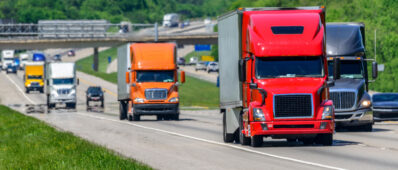
A significant proportion of goods movement is transported by trucks, and the value and tonnage of goods are expected to grow over time. Trucks have a significant impact on pavement infrastructure, traffic congestion, pollution and "quality of life". To provide a better understanding of the behavior of freight-related truck movements, it is necessary to obtain an abundant high resolution truck data.  Objectives: The proposed study comprises three main phases. The objective of the first phase is to show that truck body classifications can be accurately obtained from the models developed using inductive signature technology, and that equipment at WIM stations can be readily configured to work with Inductive signature hardware. In the second phase, the objective is to develop a system architecture and to train the developed models at selected VDS and WIM locations. An investigation will be made on how the higher resolution classification data at WIM stations can be extrapolated to VDS locations. In the final phase, the objective is to perform an expanded deployment that will allow data to be usable at a larger geographical scale, such as at the regional or state level.  Study Sites: The data to be used for model development will be obtained from the detector testbed at the southbound San Onofre Truck Weigh and Enforcement Facility equipped with an advanced loop detection system as well as at selected WIM and VDS stations in the state of California.  Analysis: The investigators will use a combination of advanced mathematical models and data analysis tools such as artificial neural networks, data clustering, and heuristic algorithms to develop the models in this study.  Anticipated Results: The implementation of the above objectives is expected to yield data that will help to address a significant data gap in truck movement statistics in relation to body configuration, which has implications for truck function and associated industries. This is especially beneficial in providing the freight movement data for a current Caltrans research effort in developing a statewide freight forecasting model. Without this data, freight modeling efforts tend to be calibrated against aggregate truck volumes instead of detailed truck volumes by truck type. Another advantage is that this data could enhance the Vehicle Inventory and Use Survey (VIUS) data for California by providing spatial and temporal characteristics to the vehicle type classifications.
Related Publications

research report | Jan 2016

Development of a New Methodology to Characterize Truck Body Types along California Freeways

Read more

Operational Improvements to the California Vehicle Activity Database (CalVAD)

Status

Complete

Project Timeline

May 1, 2014 - May 31, 2016

Principal Investigator

Will Recker

Project Team

Craig Rindt, James Marca, Yue (Ethan) Sun

Sponsor & Award Number

CARB: 13-756

Areas of Expertise

Intelligent Transportation Systems, Emerging Technologies, & Big Data

Team Departmental Affiliation

Civil and Environmental Engineering

Project Summary

The Institute of Transportation Studies at the University of California, Irvine, developed the California Vehicle Activity Database (CalVAD) for ARB. CalVAD merges Caltrans’ raw vehicle detection system (VDS) volume and occupancy data with Caltrans’ weigh in motion (WIM) data. The VDS data is collected approximately every half mile on urban California highways every 30 seconds, and the WIM data weighs and measures every truck at just over 100 detector stations scattered throughout the state on major truck routes. In addition, estimates of hourly arterial volumes are produced by applying hourly scaling factors to the average annual daily traffic (AADT) volumes listed in the California Highway Performance Monitoring System (HPMS) data. This proposal is to further enhance and improve the California Vehicle Activity Database (CalVAD) tool. There are three main objectives to the proposed work. The first is to develop a quality assurance and quality control (QA/QC) methodology that will let CalVAD users how much confidence they should place in the numbers they are using. The second task is to improve the outward-facing CalVAD website. The third task is to add additional years of data and to deploy a method for continuously adding new data to CalVAD as it becomes available. This third task will also encompass laying the groundwork for integrating the results of the truck classification project work that is being developed in parallel at UCI ITS, as well as any other vehicle activity projects ARB may undertake in the future. By the end of this CalVAD project extension, we expect that CalVAD will successfully migrate from research project into a deployed and useful tool for ARB and other public agencies to use.

Integration of California Vehicle Activity Database (CalVAD) and Truck Activity Monitoring Systems (TAMS)

Status

Complete

Project Timeline

June 30, 2017 - June 29, 2018

Principal Investigator

Stephen Ritchie

Project Team

Andre (Yeow Chern) Tok

Sponsor & Award Number

CARB: 16AQP009

Areas of Expertise

Intelligent Transportation Systems, Emerging Technologies, & Big Data

Team Departmental Affiliation

Civil and Environmental Engineering

Project Summary

The integration of TAMS and CalVAD will enhance and expand the current data collection capability by providing better truck count estimates at conventional traffic monitoring sites. The new data could potentially help ARB to better define its scoping plan, understand freight movements, improve current methodology used in developing of the State Implementation Plan (SIP), improve EMFAC model, and provide data for calibration and validation of Metropolitan Planning Organization’s (MPO) and Statewide travel demand models. This research proposed aligns extremely well with ARB’s goals and mission by providing the best possible scientific and economic information. The results from this study will be used to improve inventory development such as ARB’s mobile source inventory, which will subsequently benefit air quality modeling which are the basis for critical planning efforts such as the State Implementation Plan (Federal Clean Air Act), Scoping Plan (AB-32), Sustainable Freight Action Plan (Executive Order B-32-15), and California Transportation Plan (SB-391). This will help to provide a better understanding of spatial and temporal medium and heavy duty trucks activity in California. Furthermore, it will help us track progress on performance of Sustainable Communities Strategies under SB375, and can be used by MPOs for transportation demand model calibration and validation.

Investigation of Heavy-Duty Vocational Vehicle Usage and Suitability of Aerodynamic Improvement Devices

Status

Complete

Project Timeline

June 30, 2017 - April 1, 2019

Principal Investigator

Stephen Ritchie

Project Team

David Sedath, Andre (Yeow Chern) Tok, Rezwana Rafiq, Brian Casebolt, Suman Mitra

Sponsor & Award Number

CARB: 16MSC012

Areas of Expertise

Freight, Logistics, & Supply Chain Other

Team Departmental Affiliation

Civil and Environmental Engineering

Project Summary

This study seeks to paint a clear picture of the types of vocational class 4 – 6 vehicles, with 14,001 to 26,000 lbs. gross vehicle weight rating, operating in the state of California, how they are used, and by whom.   Furthermore, it will seek to answer questions about the number of Class 4-6 box type vehicles operating within in the state, how many drive at high and low speeds and daily distances they operate within.  This information will be gathered through a survey and data collection exercise and combined in a way that ARB can better understand the statewide impact, aerodynamic improvement devices could have on heavy-duty vocational vehicle fuel economy.

Low-Carbon Transportation Incentive Strategies Using Performance Evaluation Tools for Heavy-Duty Trucks and Off-Road Equipment

Status

Complete

Project Timeline

June 1, 2020 - June 30, 2024

Principal Investigator

Stephen Ritchie

Project Team

Craig Rindt, Mingqi Yao, Andre (Yeow Chern) Tok, Koti Allu, Esmaeil (Sina) Dabbagh, Farzana Khatun, Blake Lane, Michael Mackinnon

Sponsor & Award Number

CARB: 19RD026

Areas of Expertise

Freight, Logistics, & Supply Chain Transportation Economics, Funding, & Finance Zero-Emission Vehicles & Low-Carbon Fuels

Team Departmental Affiliation

Civil and Environmental Engineering

Project Summary

The objective of this project is to identify potential policy and incentive strategies that promote greater adoption of low-carbon transportation (LCT) technologies (zero and near-zero carbon and pollutant emissions) in the heavy-duty and off-road sectors. The research will:  1. Synthesize current incentive programs and analyze their effect on low-carbon technology uptake among heavy-duty vehicles (HDV) and off-road equipment (ORE), 2. Develop an incentive program performance evaluation tool that quantifies the emissions reductions, health and ancillary benefits and cost-effectiveness of low-carbon transportation incentive programs, 3. Recommend incentive strategies by vehicle and vocation types, and at varying geographic scales (State, regional and community level), and  4. Forecast low-carbon transportation technologies’ attainment of cost parity or market acceptance relative to conventional technologies without incentive program supports.

Related Publications

research report | Dec 2023

Low-Carbon Transportation Incentive Strategies Using Performance Evaluation Tools for Heavy-Duty Trucks and Off-Road Equipment

Read more
Video Presentation | Jun 2024

Low-Carbon Transportation Incentive Strategies for on and off-road heavy vehicles

Read more

Surveillance of Locomotive Activity in the State of California

Status

Complete

Project Timeline

February 1, 2023 - February 1, 2025

Principal Investigator

Stephen Ritchie

Project Team

Guoliang Feng, Andre (Yeow Chern) Tok, Yiqiao Li

Sponsor & Award Number

CARB: 22TTD001

Areas of Expertise

Freight, Logistics, & Supply Chain Intelligent Transportation Systems, Emerging Technologies, & Big Data

Team Departmental Affiliation

Civil and Environmental Engineering

Project Summary

Locomotives are essential for moving freight throughout California. The mostly commonly used locomotives are powered by diesel engines that emit significant amounts of air pollutants, including diesel particulate matter (DPM), fine particulate matter (PM2.5), oxides of nitrogen (NOx), and Green House Gases (GHGs). Locomotive emissions affect communities near rail operations and residents throughout the state, resulting in premature mortalities, increased cancer risk, hospitalizations, and emergency room visits. Many of the communities exposed to harmful locomotive emissions are environmental justice and Assembly Bill 617 communities, meaning the individuals within those communities already live with multiple layers of health burden. To support the California Air Resources Board’s (CARB) efforts to understand emissions from locomotives operating in the state, and to quantify locomotive activity and associated emissions within the State, enabling accurate emissions accounting for obligations such as the State Implementation Plan, the University of California at Irvine will develop recognition tools to identify information on locomotives passing surveillance stations in California. Approximately 13,000 locomotives operate within California each year, many travelling in from outside the State. Surveillance will help to develop CARB understanding of locomotive operation, and when checked against existing data about locomotive certification levels, will help to quantify emissions, informing future policy. Full-time monitoring in multiple locations would necessitate extensive staff time to process and tabulate information. A recognition tool will bring greater understanding of locomotive emissions in the State. The goal of the project is to place surveillance equipment, such as motion-triggered video cameras, at multiple surveillance stations throughout the State by the end of 2024. The recognition tool must isolate locomotives from among other rolling stock on the train, refine recorded information for readability, and record the locomotive identification number, operator identification, time, date, and location.

Activity- and Accessibility-Based Framework for Mobility Equity Evaluation

Status

In Progress

Project Timeline

June 1, 2024 - December 31, 2025

Principal Investigator

Michael HylandMichael Hyland

Project Team

Elisa Borowski, Tanjeeb Ahmed

Sponsor & Award Number

CARB: 23STC020

Areas of Expertise

Safety, Public Health, & Mobility Justice Travel Behavior, Land Use, & the Built Environment

Team Departmental Affiliation

Civil and Environmental Engineering

Project Summary

Existing transportation evaluation frameworks and metrics are oriented toward ranking individual project components in terms of their equity impacts. As such, existing metrics are not meant to measure the synergistic effects of multiple diverse mobility investments on outcomes of importance (e.g., access to economic, social, cultural, educational, etc. opportunities). Measuring the synergistic impacts between multiple investments and quantifying each project’s contribution is critical to properly evaluate combinations of mobility investments. Moreover, existing metrics struggle to capture the benefits of local-scale mobility investments such as trees on sidewalks, bike lanes, and sidewalk repairs. To address these issues, we propose an activity- and accessibility-based evaluation framework that incorporates multiple metrics to holistically determine the equity impacts of several synergistic but diverse transportation investments. The proposed metrics will measure accessibility improvements at the local-scale and for specific socio-economic groups, using fine-grained network modeling techniques. The research team expects that the proposed evaluation framework will inform state-level regulators, planners, and policymakers on the performance of their mobility investments in achieving accessibility and equity outcomes.

Impact of Telecommuting and Remote Services on Transportation, Land Use, and Climate Change

Status

In Progress

Project Timeline

June 1, 2024 - November 30, 2026

Principal Investigator

Michael McNally

Project Team

Rezwana Rafiq

Sponsor & Award Number

CARB: 512590-UCI
(Subcontract to CSU-Dominguez Hills)

Areas of Expertise

Travel Behavior, Land Use, & the Built Environment

Team Departmental Affiliation

Civil and Environmental Engineering

Project Summary

This project at ITS-Irvine is a sub-contract to Cal State Dominguez Hills. California Metropolitan Planning Organizations (MPOs) may incorporate telecommuting and remote services such as e-learning, e-commerce, and telehealth in their sustainable communities strategies (SCS) to reduce vehicle miles traveled (VMT) and greenhouse gas (GHG) emissions. However, while use and study of these strategies increased significantly during the COVID-19 pandemic, their impacts on travel behavior and patterns, GHG emissions, and land use are complex, dynamic, and yet to be fully determined. Transportation usage declined significantly during initial lockdowns, clearing freeways and cleaning the air as telecommuting and remote service usage increased. As public health restrictions softened and households and organizations returned to a new normal, telecommuting and remote service use remained higher than pre-pandemic levels; however, VMT and emissions levels have returned, and public transit has remained low. This raises critical questions about the transportation, land use, and emissions impacts of telecommuting and remote services that this study will examine using a publicly-available transportation (U.S. Census, National Household Travel Survey, Google Mobility) and time-use data (American Time Use Survey), commercial transportation data purchased from Replica, ecommerce data from California Department of Tax and Fee Administration, survey instruments administered through IPSOS to capture travel behavior and patterns across MPOs, and survey instruments distributed to MPOs regarding SCS and California organizations regarding telecommuting policy.

California Locomotive Surveillance System Maintenance, Expansion, and Analysis

Status

In Progress

Project Timeline

February 21, 2025 - February 20, 2030

Principal Investigator

Stephen Ritchie

Project Team

Andre (Yeow Chern) Tok

Sponsor & Award Number

CARB: 24IT-TTD001

Areas of Expertise

Freight, Logistics, & Supply Chain Intelligent Transportation Systems, Emerging Technologies, & Big Data

Team Departmental Affiliation

Civil and Environmental Engineering

Project Summary

The University will maintain the locomotive surveillance software the University developed in Agreement No. 22TTD001 and make any necessary updates to keep the program functional. The University will assist the State in expanding the locomotive surveillance system to cover additional locations in California. The University will assist with the integration of the locomotive surveillance system into the State’s information technology systems. The University will determine the feasibility of using video footage as an indicator of a locomotive idling and integrate such capability into the locomotive surveillance system if determined feasible. The University will conduct an analysis of data from the locomotive surveillance system to determine overall trends of locomotives, railcars, and trains in the State and in California disadvantaged communities. The University will have the option to add any additional features deemed useful by the State to the locomotive surveillance system. Completion of these project goals will support the State's efforts to understand emissions from locomotives operating in the state, and to quantify locomotive activity and associated emissions within the State, enabling accurate emissions accounting for obligations such as the State Implementation Plan.

Posts navigation

Newer posts
When autocomplete results are available use up and down arrows to review and enter to go to the desired page. Touch device users, explore by touch or with swipe gestures.

Recent Posts

  • TRIP Student Spotlight: Kai Friedrich
  • PRIME Student Spotlight: Ryan Shaffie
  • TRIP Student Spotlight: Charlotte Dunlap
  • PRIME Student Spotlight: Kingston Wu
  • Faculty Spotlight: Dr. Michael Hyland

Recent Comments

No comments to show.

Archives

  • June 2026
  • January 2026
  • November 2025
  • October 2025
  • September 2025
  • August 2025
  • July 2025
  • June 2025
  • May 2025
  • February 2025
  • January 2025
  • October 2024
  • September 2024
  • August 2024
  • July 2024
  • June 2024
  • May 2024
  • April 2024
  • February 2024
  • December 2023
  • November 2023
  • September 2023
  • April 2023
  • November 2022
  • October 2022
  • September 2022
  • May 2022
  • April 2022
  • March 2022
  • February 2022
  • January 2022
  • November 2021
  • October 2021
  • August 2021
  • April 2021
  • January 2021
  • December 2020
  • November 2020
  • August 2020
  • July 2020
  • June 2020
  • May 2020
  • April 2020
  • March 2020
  • February 2020
  • January 2020
  • December 2019
  • November 2019
  • May 2019
  • April 2019
  • February 2019
  • January 2019
  • December 2018
  • November 2018
  • October 2018
  • September 2018
  • May 2018
  • April 2018
  • March 2018
  • February 2018
  • January 2018

Categories

  • Award
  • News
  • Research in Motion
  • Spotlight

Anteater Instruction and Research Bldg (AIRB)
Irvine, CA 92697
Phone: 949-824-5989 | Fax: 949-824-8385

  • linkedin
Subscribe to the ITS- Irvine mailing list Subscribe to Events Calendar

About

  • Leadership
  • Affiliated Centers
  • ITS-Irvine Policies
  • Contact Us

Research

  • Areas of Expertise
  • Publications
  • Projects
  • Requests for Proposals

People

  • Researchers
  • Administrative Staff
  • Current Students
  • PhD Graduates
  • Past Faculty Associates

Press

  • News
  • Events

©2026 ITS-Irvine