
published journal article
Policy Implications of Incorporating Hybrid Vehicles into High-Occupancy Vehicle Lanes
Journal of Transportation Systems Engineering and Information Technology
Publication Date
April 1, 2010
published journal article
published journal article
Network-based security has emerged as an increasingly critical challenge in the domain of the Internet of Things (IoT). A number of network intrusion detection systems (NIDS), typically relying on sophisticated machine learning (ML) algorithms, have been proposed to monitor network traffic and detect malicious activity. However, these NIDS designs require extensive memory and computational power, exceeding the capability of today’s IoT devices, and often fail to provide timely detection of network attacks. To tackle this issue, we propose mathsf HyperDetect , the first attempt at NIDS modeling that leverages the highly efficient and parallel operations of brain-inspired hyperdimensional computing (HDC). Our innovative model updating method effectively mitigates model saturation and significantly reduces the number of retraining iterations needed to reach convergence. Additionally, we employ a novel dynamic encoding technique to regenerate insignificant dimensions, considerably lowering the dimensionalities required to achieve high-quality performance and further accelerating the learning process. mathsf HyperDetect delivers on average 5.02times faster training and 31.83times faster inference compared to state-of-the-art (SOTA) learning approaches on a wide range of network intrusion classification tasks. We also extensively evaluate mathsf HyperDetect on embedded hardware to demonstrate its low-latency and resource-efficient characteristics.
published journal article
Background Compared to commonly-used green space indicators from downward-facing satellite imagery, street view-based green space may capture different types of green space and represent how environments are perceived and experienced by people on the ground, which is important to elucidate the underlying mechanisms linking green space and health. Objectives This study aimed to evaluate machine learning models that can classify the type of vegetation (i.e., tree, low-lying vegetation, grass) from street view images; and to investigate the associations between street green space and socioeconomic (SES) factors, in Los Angeles County, California. Methods SES variables were obtained from the CalEnviroScreen3.0 dataset. Microsoft Bing Maps images in conjunction with deep learning were used to measure total and types of street view green space, which were compared to normalized difference vegetation index (NDVI) as commonly-used satellite-based green space measure. Generalized linear mixed model was used to examine associations between green space and census tract SES, adjusting for population density and rural/urban status. Results The accuracy of the deep learning model was high with 92.5% mean intersection over union. NDVI were moderately correlated with total street view-based green space and tree, and weakly correlated with low-lying vegetation and grass. Total and three types of green space showed significant negative associations with neighborhood SES. The percentage of total green space decreased by 2.62 [95% confidence interval (CI): −3.02, −2.21, p < 0.001] with each interquartile range increase in CalEnviroScreen3.0 score. Disadvantaged communities contained approximately 5% less average street green space than other communities. Conclusion Street view imagery coupled with deep learning approach can accurately and efficiently measure eye-level street green space and distinguish vegetation types. In Los Angeles County, disadvantaged communities had substantively less street green space. Governments and urban planners need to consider the type and visibility of street green space from pedestrian's perspective.

research report
The Federal Highway Administration (FHWA) vehicle classification scheme is designed to serve various transportation operational and planning needs. Many transportation agencies rely on Weigh-In-Motion and automatic vehicle classification sites to collect vehicle classification count data. However, these systems are not widely deployed due to high installation and operations costs. One cost-effective approach investigated by researchers has been the use of single inductive loop sensors as an alternative to obtain FHWA vehicle classification data. However, most models do not accurately classify under-represented classes, even though many of these minority classes pose disproportionally adverse impacts on pavement infrastructure and the environment. As a consequence, previous models have not been able to adequately classify under-represented classes, and the overall performance of the models is often masked by excellent classification accuracy of the majority classes, such as passenger vehicles and five-axle tractor-trailers. This project developed a bootstrap aggregating (bagging) deep neural network (DNN) model on a truck-focused dataset obtained from Truck Activity Monitoring System (TAMS) sites, which leverage existing inductive loop sensor infrastructure coupled with deployed inductive loop signature technology and already deployed statewide at over ninety locations across all Caltrans Districts. The proposed method significantly improved the model performance on truck-related classes, especially minority classes such as Classes 7 and 11 which were overlooked in previous research studies. Remarkably, the proposed model is also capable of distinguishing classes with overlapping axle configurations, which is generally a challenge for axle-based sensor systems.
 conference paper |
Feb 2024
conference paper |
Feb 2024
conference paper
working paper
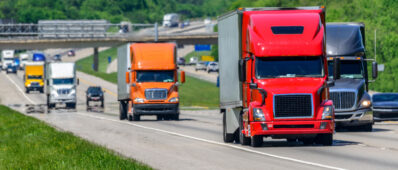
This report is concerned with the characteristics and consequences of over 9,000 truck-involved freeway accidents and non-accident incidents in a three-county case study region in Southern California. The research was conducted in two major phases: (1) identification of the number and type of truck-involved accidents occurring on freeways in the region, together with statistical analyses of the influence of a wide range of conditions on the frequency and severity of these accidents; and (2) estimation of the impact of these accidents on the freeway system in terms of congestion and delay, and estimation of the total annual economic costs of these accidents.Chapter Two reports the results of statistical analyses of the salient characteristics of over 9,000 truck-involved freeway accidents that occurred in the region during 1983-84. Chapter Three focuses on the immediate consequences of these accidents: accident severity (i.e. injuries and fatalities), incident duration, and lane closure. Chapter Four is an analysis of 424 major incidents involving large trucks on freeways in the region during 1983-1985. Chapter Five focuses on the impacts of truck-involved mainline collisions on freeway congestion and delay; simulation models are used to estimate total delay attributable to such collisions for the 1987-88 period. Chapter Six focuses on the total economic costs of these accidents. We conclude that over 10 million vehicle hours, and $154.6 million dollars, may be lost each year due to truck-involved freeway accidents in the region.
 research report |
Dec 1988
research report |
Dec 1988
published journal article
working paper
Paramics is a suite of high performance software tools used to model the movement and behavior of individual vehicles on urban and highway road networks. The Paramics Project Suite consists of Modeller, Processor, Analyzer, and Programmer. Paramics Programmer is a framework that allows the user to customize many features of underlying simulation model. Access is provided through a Functional Interface or Application Programming Interface (API). The capability to access and modify the underlying simulation model through API is essential for research. Such an API should have a dual role, first to allow researchers to override the simulators default models, such as car following, lane changing, route choices for instance, and second, to allow them to interface complementary modules to the simulator. Complementary modules could be any ITS application, such as signal optimization, adaptive ramp metering, incident management and so on. In this way, new research ideas could be easily tested using simulator before the implementation in the real world. Three developed APIs are documented in this report; namely, full-actuated signal control, actuated signal coordination, and actuated ramp metering control. Section 2, 3, and 4 will have detailed descriptions for each of them. In each section, the control logic, data structure and control interface, data input requirements, and some implementation considerations are included.
published journal article
published journal article