Skip to content
The Institute of Transportation Studies at UC Irvine
  • About
    • Leadership
    • Affiliated Centers
    • IT Resources
    • ITS-Irvine Policies
    • Contact
  • Research
    • Areas of Expertise
    • Publications
    • Projects
    • Requests for Proposals
    • TRIP Program
    • PRIME Program
  • Education
  • People
    • Researchers
    • Administrative Staff
    • Current Students
    • PhD Graduates
    • Past Faculty Associates
  • Support Us
  • News & Events
    • News
    • Events
  • About
    • Leadership
    • Affiliated Centers
    • IT Resources
    • ITS-Irvine Policies
    • Contact
  • Research
    • Areas of Expertise
    • Publications
    • Projects
    • Requests for Proposals
    • TRIP Program
    • PRIME Program
  • Education
  • People
    • Researchers
    • Administrative Staff
    • Current Students
    • PhD Graduates
    • Past Faculty Associates
  • Support Us
  • News & Events
    • News
    • Events

Sponsor: SB1

Airport Parking as Grid Assets: Optimal Electric Vehicle Charging Infrastructure and Management

Status

In Progress

Project Timeline

September 1, 2025 - September 30, 2026

Principal Investigator

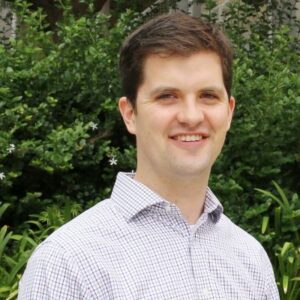
Matt DeanMatthew Dean

Sponsor, Program & Award Number

SB1 // STRP Faculty Research: 2026-06

Areas of Expertise

Zero-Emission Vehicles & Low-Carbon Fuels

Team Departmental Affiliation

Civil and Environmental Engineering

Project Summary

Airports represent unique opportunities for electric vehicle (EV) charging, given long parking durations and high energy demands. Using parking and charging data from San José Mineta International and San Luis Obispo County Regional Airports, this project develops a model to determine the most effective charging infrastructure for airport lots and explores strategies like time-of-use optimization and demand response to align with renewable energy and improve profitability. Findings will help airports and similar transportation hubs plan investments that support California’s electrification goals while increasing profitability.

Modeling and Analyzing Cost Overruns, Delays, and Cancellations in Senate Bill 1 Projects

Status

Complete

Project Timeline

October 1, 2022 - December 31, 2023

Principal Investigator

Michael HylandMichael Hyland

Project Team

Jiangbo (Gabe) Yu, Arash Ghaffar

Sponsor, Program & Award Number

SB1 // STRP Faculty Research: 2023-39
(Also see the UC ITS page)

Areas of Expertise

Infrastructure Delivery, Operations, & Resilience

Team Departmental Affiliation

Civil and Environmental Engineering

Project Summary

Accurate estimates of infrastructure project costs, duration, and risks are critical in making informed decisions that can significantly impact quality of life in California. Caltrans’ preliminary examination of progress reports for projects that have been funded by the Road Repair and Accountability Act of 2017, commonly referred to as Senate Bill 1 (SB 1), reveals severe underestimates in project costs and timetables. Notably, these occurred even before the COVID pandemic. Few projects are expected to finish under budget or before the estimated completion date. This project examines the difference between initial SB 1 project cost and duration estimates in grant applications with the actual costs and completion times using publicly available data from SB 1 progress reports to identify the types of projects that are more likely to underestimate outcomes. Specifically, the research looked at which phases of a project are more prone to cost escalations and delays for different project types, infrastructure programs, and geographic locations. Results show consistent patterns of overruns associated with fiscal periods, programs, and geographic locations. In addition, results indicate that the common 20% contingency is generally insufficient, indicating the need for better risk estimation in project planning.

Related Publications

research report | Oct 2024

Modeling and Analyzing Cost Overruns, Delays, and Cancellations in Senate Bill 1 Projects

Read more
policy brief | Oct 2024

SB1 Project Performance: Cost Overruns, Schedule Delays, and Cancellations

Read more

Quantifying the Electric Grid Cost Savings of Increasing E-Bike Mode Share

Status

Complete

Project Timeline

October 1, 2022 - June 14, 2024

Principal Investigator

Michael HylandMichael Hyland

Project Team

Kate Forrest, Brian Tarroja, Ritun Saha, Michael Mackinnon

Sponsor, Program & Award Number

SB1 // STRP Faculty Research: 2023-40
(Also see the UC ITS page)

Areas of Expertise

Public Transit, Shared Mobility, & Active Transportation Zero-Emission Vehicles & Low-Carbon Fuels

Team Departmental Affiliation

Civil and Environmental Engineering

Project Summary

Electrifying vehicles to meet transportation demands is critical to support the transition away from fossil fuels. The replacement of fossil-fuel-powered vehicles with battery electric vehicles (BEVs) is expected to play a major role. The mass deployment of BEVs without reducing vehicle-miles-traveled, however, will increase the peak load on the electric grid, requiring more costly upgrades to electrical system supply and distribution capacity. While improved smart grid management can mitigate these expenses, the real-world acceptance of smart charging programs by BEV drivers remains uncertain. Since most vehicle trips are less than 5 miles, an alternative to mitigate increases in peak electric loads would be to substitute more energy-efficient transportation modes, such as electric bikes (e-bikes), for future BEV trips. While prior studies have analyzed various benefits of increasing e-bike market share – including shorter travel times in congested cities, mental and physical health benefits, and lower emissions – no studies have quantified the cost-saving benefits for the electric grid infrastructure of increasing e-bike mode share. This project will develop a model to quantify the extent to which substituting e-bikes for BEVs reduces grid peak loads imposed by vehicle electrification, and to analyze the equipment needs and monetary costs associated with required upgrades. To accomplish this, the researchers are focusing on an analysis for the San Diego region. First, they will analyze vehicle trips in the San Diego region using the San Diego Association of Governments’ agent- and activity-based travel model system. Using this data, they will identify when, where, and for how long BEVs are parked and available for charging to ensure that these vehicles can meet all their intended trips. Second, the team will develop an in-house electric vehicle charging model to translate trip data into hourly electric grid load profiles for different vehicle types and infrastructure scenarios over an entire year. Lastly, the researchers will determine how substituting e-bikes for BEVs across different trip types and distances affects the annual peak electric grid load and estimate the cost savings from upgrading the electric distribution infrastructure in two representative neighborhoods—one single-family-oriented and one multi-family-oriented.

Related Publications

policy brief | Jul 2024

Shifting Future Electric Vehicle Trips to e-Bikes Could Help Reduce Electricity Demand at Critical Times in California

Read more

A Review of Reduced and Free Transit Fare Programs in California

Status

Complete

Project Timeline

April 1, 2019 - January 17, 2020

Principal Investigator

Jean-Daniel Saphores

Project Team

Deep Shah, Farzana Khatun

Sponsor, Program & Award Number

SB1 // STRP Faculty Research: 2019-55
(Also see the UC ITS page)

Areas of Expertise

Public Transit, Shared Mobility, & Active Transportation

Team Departmental Affiliation

Civil and Environmental Engineering

Project Summary

To gain a better understanding of the current use and performance of free and reduced-fare transit pass programs, researchers at UC Irvine surveyed California transit agencies with a focus on members of the California Transit Association (CTA) during November and December 2019. Fifty-nine agencies, representing a broad cross-section of California transit operators, responded. Three quarters of respondents offered one or more free or reduced-fare transit pass programs in fiscal year 2018-19. While most respondents stated that free or reduced-fare transit passes increase ridership, many had concerns about the effect on their agency’s farebox recovery ratio, and to some extent on the fiscal health of their agency, though almost half of the respondents did not know the actual impacts. Those agencies offering student pass programs funded by student fees or employee programs funded by employers did not report any negative impact on ridership or on farebox recovery ratios. This confirms that free or reduced-fare transit pass programs structured like insurance programs (where a large group of potential transit riders—such as all students at a college or all employees in a large firm—periodically pays a lump sum to a transit agency while only a subset of that group actually uses transit) can be good for both riders and transit agencies. To achieve the full potential of these programs, they should be integrated into comprehensive policies to achieve California’s social and environmental goals.

Related Publications

policy brief | May 2020

A Review of Reduced and Free Transit Fare Programs in California

Read more
research report | Jan 2020

A Review of Reduced and Free Transit Fare Programs in California

Read more

Evaluating Heterogeneity in Transit Safety Perceptions and Reliability among Young Transit Riders

Status

In Progress

Project Timeline

October 1, 2024 - August 31, 2026

Principal Investigator

David Brownstone

Project Team

Henry Bernal, Chen (Cassie) Zhang

Sponsor, Program & Award Number

SB1 // STRP Faculty Research: 2025-26
(Also see the UC ITS page)

Areas of Expertise

Public Transit, Shared Mobility, & Active Transportation Safety, Public Health, & Mobility Justice

Team Departmental Affiliation

Economics

Project Summary

Safety and heightened exposure to crime on transit in recent years are increasing concerns that have received widespread media coverage. Young riders are particularly concerned about crime on transit at a time when fewer younger drivers are obtaining driver’s licenses. In Los Angeles, crimes covering LA Metro have risen 55 percent between 2020 and 2023 while violent crimes rose 11 percent between 2022 and 2023. This poses an equity issue to young riders, given a large majority of young riders on transit are from low-income households and need safe, fast, reliable service. This analysis will seek to determine how individual safety concerns and perceptions impact subjective values of travel time reliability. To do this, the researchers will survey Metro riders, many of whom also participate in GoPass, which has generated substantial cost savings for young Metro riders.

Analyzing the Effectiveness of Efforts to Reconnect Communities and Redress Past Harms in California

Status

In Progress

Project Timeline

January 13, 2025 - December 31, 2026

Principal Investigator

Doug Houston

Project Team

Shengxiang Jin

Sponsor, Program & Award Number

SB1 // STRP Faculty Research: 2025-29

Areas of Expertise

Safety, Public Health, & Mobility Justice Travel Behavior, Land Use, & the Built Environment

Team Departmental Affiliation

Urban Planning and Public Policy

Project Summary

The federal government and California have adopted policies, developed programs, and allocated funds to redress the past and contemporary harms caused by transportation infrastructure development. They are committed to directing a significant portion of the benefits to disadvantaged communities. These efforts fall under the rubric of “reconnecting communities,” which aims to remedy past and ongoing injustice through new infrastructure. Equally important is the goal of meaningful stakeholder engagement, which requires rectifying biased participatory practices. This project aims to improve restorative justice (RJ) practices in transportation and infrastructure planning by evaluating the effectiveness of programs to redress harm caused by transportation infrastructures. The project team will use spatial analysis and a survey of several dozen Reconnecting Communities (RC) projects to identify those harmed and assess engagement practices used. The team will conduct six RC case studies throughout California to examine historical and contemporary infrastructure decision-making. Finally, the team will conduct a deep process study of advisory board decision-making processes in the Bay Area to understand types of government-led RJ engagement that can truly repair harms.

Improving Rail Emissions Estimation Using Vision-Based Monitoring and Operational Data

Status

In Progress

Project Timeline

September 1, 2025 - September 30, 2026

Principal Investigator

Stephen Ritchie

Sponsor, Program & Award Number

SB1 // STRP Faculty Research: 2026-23

Areas of Expertise

Freight, Logistics, & Supply Chain Intelligent Transportation Systems, Emerging Technologies, & Big Data Safety, Public Health, & Mobility Justice

Team Departmental Affiliation

Civil and Environmental Engineering

Project Summary

Traditional rail emissions models oversimplify train operations, assuming fixed train composition and uniform railcar weight. Leveraging ITS-Irvine’s Rail Activity Monitoring System, this project develops a more accurate method to estimate emissions. It will also explore linking these estimates to real-world air quality measurements, supporting more precise policymaking and planning.

Examining the Safety and Efficiency Implications of Several Autonomous Car-following Models

Status

Complete

Project Timeline

August 1, 2021 - August 31, 2022

Principal Investigator

Wenlong Jin

Project Team

Ximeng Fan

Sponsor, Program & Award Number

SB1 // STRP Faculty Research: 2022-39
(Also see the UC ITS page)

Areas of Expertise

Intelligent Transportation Systems, Emerging Technologies, & Big Data Safety, Public Health, & Mobility Justice

Team Departmental Affiliation

Civil and Environmental Engineering

Project Summary

Autonomous vehicles hold promises for revolutionizing transportation, but they also face many challenges in both safety and efficiency. Traffic system managers need to know what kind of autonomous vehicles should be allowed to operate on California’s roads and what driving behavior to expect from them. Based on daily driving experiences, traffic rules, vehicle characteristics, and empirical observations, sound driving behavior should be collision-free, cars should be safely spaced and travel at reasonable speeds. Autonomous cars’ driving behaviors should satisfy these principles to be safe, efficient, and human-like. These principles have been used to develop car-following models and have been incorporated into standard Adaptive Cruise Control (ACC) systems, but these models tend to be too complicated to analyze, and there is no guarantee that they satisfy safe driving criteria. This research will systematically examine the safety and efficiency of different existing car-following models, ACC models, Artificial Intelligence-autonomous vehicle driving models, as well as the performance of Positioning, Navigation and Timing (PNT) and other sensing technologies. Using real world data, the researchers will calibrate the braking distances and the speed profiles of human-driven vehicles at signalized intersections. The project will then develop a new driving model to describe human drivers’ behaviors and prescribe autonomous vehicles’ driving policies. Further, the team will examine the impacts of PNT accuracy on the safety and efficiency of the model. This research may help to increase users’ confidence in the safety and performance of the transportation system.

Related Publications

policy brief | Jan 2025

The Missing Link in Automated Vehicle Safety: Projected Braking and Realistic Driving Behavior

Read more
Preprint Journal Article | May 2025

Provably safe and human-like car-following behaviors: Part 1. Analysis of phases and dynamics in standard models

Read more

Exploring Transportation Mode Choice and Participation in LA Metro’s “GoPass” Program Among Los Angeles Community College Students

Status

Complete

Project Timeline

September 25, 2023 - June 30, 2025

Principal Investigator

David Brownstone

Sponsor, Program & Award Number

SB1 // STRP Faculty Research: 2024-32
(Also see the UC ITS page)

Areas of Expertise

Public Transit, Shared Mobility, & Active Transportation

Team Departmental Affiliation

Economics

Project Summary

While automobile traffic and freeway congestion have returned to pre-COVID levels, transit agencies continue to face declining ridership, staffing shortages, and service reductions. In the fall of 2021, LA Metro introduced the GoPass Fareless Initiative, offering free transit access to students in grades K-14 within eligible school and community college districts in Los Angeles County. The program's eligibility is determined by the community college district, which can opt in by paying a nominal cost-sharing fee of $3 per enrolled student per year. Students in districts that opt in can participate by acquiring a free pass and registering it with LA Metro. However, only about 15% of Los Angeles Unified School District students and 10% of Los Angeles Community College District students choose to participate in GoPass. The project has two main objectives: (1) to analyze the factors affecting enrollment, while controlling for socio-economic characteristics, and (2) to determine whether GoPass enrollment leads students to choose more sustainable modes of transportation. To achieve these goals, the researchers will survey students at the nine campuses in the Los Angeles Community College District. These campuses represent the majority of the community college population in Los Angeles County. The survey will gather information on employment, household composition, and non-academic travel activities. It will also ask participants about the availability of household vehicles, bicycles, and other transportation options to understand the factors that influence students' transportation choices. The researchers will then use the data to model GoPass participation and overall mode selection among the population of community college students.

An Overview of Free and Discounted Transit Fare Programs in California: What Did COVID Change?

Status

Complete

Project Timeline

January 1, 2024 - June 30, 2025

Principal Investigator

Jean-Daniel Saphores

Sponsor, Program & Award Number

SB1 // STRP Faculty Research: 2024-50
(Also see the UC ITS page)

Areas of Expertise

Public Transit, Shared Mobility, & Active Transportation

Team Departmental Affiliation

Civil and Environmental Engineering

Project Summary

In this study, the research team will survey transit agencies in California to investigate the performances of their free and reduced transit fare pass programs, the impact of COVID-19 on these programs, and conduct an in-depth analysis of selected free and reduced transit fare pass programs. In 2019, the researchers explored the availability of these programs by conducting a survey of California transit agencies; the data were obtained from 59 transit agencies. This study will extend that 2019 work. This project will involve first surveying California transit agencies, starting with the 59 agencies who answered the 2019 survey. The team will investigate if their 2019 programs are still offered, if they were changed, and inquire if new programs were created (or are being considered). The researchers will inquire about the reasons for initiating each program, eligibility criteria, funding sources, ridership, and financial impacts. Finally, to promote public transportation through fare-based incentives, the investigators will create an online dashboard with information about all known free and reduced transit pass programs in California. This study will help evaluate the evolution of free and reduced transit fare programs during and after the COVID-19 pandemic.

Related Publications

research report | Jul 2026

Pathway to a Comeback: Student Transit Passes Can Drive Ridership and Equity in Post-Pandemic California

Read more
policy brief | Dec 2025

Free and Reduced Transit Fare Programs in California Increased After COVID-19–But Can it Last?

Read more

Posts navigation

Older posts
When autocomplete results are available use up and down arrows to review and enter to go to the desired page. Touch device users, explore by touch or with swipe gestures.

Recent Posts

  • TRIP Student Spotlight: Kai Friedrich
  • PRIME Student Spotlight: Ryan Shaffie
  • TRIP Student Spotlight: Charlotte Dunlap
  • PRIME Student Spotlight: Kingston Wu
  • Faculty Spotlight: Dr. Michael Hyland

Recent Comments

No comments to show.

Archives

  • June 2026
  • January 2026
  • November 2025
  • October 2025
  • September 2025
  • August 2025
  • July 2025
  • June 2025
  • May 2025
  • February 2025
  • January 2025
  • October 2024
  • September 2024
  • August 2024
  • July 2024
  • June 2024
  • May 2024
  • April 2024
  • February 2024
  • December 2023
  • November 2023
  • September 2023
  • April 2023
  • November 2022
  • October 2022
  • September 2022
  • May 2022
  • April 2022
  • March 2022
  • February 2022
  • January 2022
  • November 2021
  • October 2021
  • August 2021
  • April 2021
  • January 2021
  • December 2020
  • November 2020
  • August 2020
  • July 2020
  • June 2020
  • May 2020
  • April 2020
  • March 2020
  • February 2020
  • January 2020
  • December 2019
  • November 2019
  • May 2019
  • April 2019
  • February 2019
  • January 2019
  • December 2018
  • November 2018
  • October 2018
  • September 2018
  • May 2018
  • April 2018
  • March 2018
  • February 2018
  • January 2018

Categories

  • Award
  • News
  • Research in Motion
  • Spotlight

Anteater Instruction and Research Bldg (AIRB)
Irvine, CA 92697
Phone: 949-824-5989 | Fax: 949-824-8385

  • linkedin
Subscribe to the ITS- Irvine mailing list Subscribe to Events Calendar

About

  • Leadership
  • Affiliated Centers
  • ITS-Irvine Policies
  • Contact Us

Research

  • Areas of Expertise
  • Publications
  • Projects
  • Requests for Proposals

People

  • Researchers
  • Administrative Staff
  • Current Students
  • PhD Graduates
  • Past Faculty Associates

Press

  • News
  • Events

©2026 ITS-Irvine