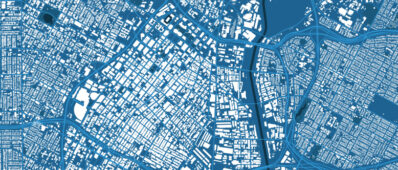
Developing a mobility system testing environment (a “Living Labâ€) of large-enough urban area with multiresolution modeling capabilities, and realistic real-world data inputs. A modeled network of intersections for signal-control testing (from the city of Irvine) and the wider area around it known as Autonomicity will be developed with simulation capabilities for security breaches on a variety of sensor, controller and communication components of the network. The activity system models used for realistic system conditions can be from an even larger network of Orange County that can be modeled at a mesoscopic level using models such as DYNAMART and
POLARIS. This platform will address the network system-level impacts of security breaches from vulnerabilities in the sensor and control systems for vehicular traffic, both in current conditions and the future scenarios of cooperative driving automation (CDA) that are expected in on-demand passenger delivery systems becoming popular now (ridehailing, shared-ride, mobility-as-a-service), and package delivery systems. This research will build on the Transportation Mobility Living Laboratory (TML2) at UCI. TML2 includes a system of infrastructure-based LiDAR that can track all road users across a network of 25 intersections in the City of Irvine to
support safety, efficiency, and energy advances through CDA. Incidents as well as security breaches can result due to inaccuracies of sensor technology. This research will focus on identifying and mitigating the vulnerabilities of the TML2 system to maintain system performance under accidental and nefarious disruptions. System effects of existing traffic sensor and control system breaches: We will develop failure scenarios resulting from potential vulnerabilities and study their system effects (delays, accident probabilities) using simulated microscopic vehicular trajectories in the presence of V2X and CDA applications. The research focus will be on
selected case studies such as on
1. automated lane centering security,
2. safety policy enforcement for Autonomous Driving, and
3. sensor redundancy design for recovery of the transportation system, and
4. IOTbased on-demand passenger delivery system vulnerabilities.
The simulated system developed in the above tasks will be used for predicting transportation domain-specific system effects and designing sufficient redundancy
while facing security breaches and attacks. Dynamic multiple time-period modeling will be used to quantify the lost efficiency in selected Autonomicity network contexts, and this will be used in the design problem:
Multi-objective Performance Evaluation:Â The platform will incorporate concepts of evaluating the modeled performance outputs using a variety of performance objectives such as
1. degradation and system resilience on temporal measures of performance in the immediate, medium-term and long-term perspectives,
2. vulnerability exposure of different user-classes in the broader activity system and the associated access to transportation srevices,
3. system degradation and resilience on various energy, and environmental impacts with measures such as fuel consumptions, emissions, and their surrogate measures such as VMT (vehicle miles traveled) and VHT (Vehicle Hours Traveled). Disaggregating the components of output measures (e.g., VMT) for various user and vehicle classes can provide richer insights on the impact of vulnerability and security breaches on each class of users.
Keywords and Index Terms:
Simulation platform, transport network performance modeling, agent-based models, cyber-security and system
vulnerability, disruption impacts