policy brief

What Challenges Can Arise from Coordinating Housing Development with Transportation?

Abstract

More systematic coordination between transportation and housing development is increasingly recognized as a promising strategy for creating more sustainable communities. One approach is to encourage higher density affordable housing developments near transit or in similarly transportation-efficient areas, such as locations with low vehicle miles traveled (VMT). However, little is known about how transportation access should be considered in guiding housing development, what challenges can arise from coordinating housing development with transportation, and what the state can do to better deal with these challenges and achieve more equitable residential densification. This brief examines equity issues and other challenges that may arise in pursuing transportation-informed housing development. Specifically, it touches on the potential impacts of Senate Bill 743, which made it easier to build more housing in low VMT locations by shifting the way traffic impacts from new housing development are evaluated under the California Environmental Quality Act. It also explores ways to achieve more inclusive development in non-rail transit areas which have received less attention compared to rail transit areas.

Suggested Citation
Jesus M. Barajas, Douglas Houston, Jae Hong Kim, Nicholas Marantz, Veronica Herrera, Alex Okashita and Maxwell Cabello (2024) What Challenges Can Arise from Coordinating Housing Development with Transportation?. Policy Brief. UC ITS. Available at: https://doi.org/10.7922/g26m3568.

working paper

Using Interactive Simulation to Model Driver Behavior Under ATIS

Abstract

This paper discusses the development and implementation of FASTCARS (Freeway and Arterial Street Traffic Conflict Arousal and Resolution Simulator), an interactive microcomputer-based animated simulator designed for in-laboratory experimentation and data collection to assist in the estimation and calibration of predictive models of driver behavior under the influence or real-time information.Limited real-world implementation of Advanced Traveler Information Systems (ATIS) technologies has made it difficult to analyze the potential impact on driver behavior. It is contended here that in-laboratory experimentation with interactive animated route choice simulators can substitute for the lack of real-work applications and provide a useful approach to data collection and driver behavior analysis.The advantages of using FASTCARS over other data collection methods to study driver behavior are realized through the program’s flexibility and completeness. FASTCARS combines a real-time interactive driving simulation program using a graphics-type interface with visual and audio effects to imitate enroute travel decision making. The simulation encompasses the entire driving process from pre-trip planning through arrival at the destination. Players are required to make a broad range of choices including goal specification, route and lane changes, and whether to use available information technologies. To model the impacts of real-time traffic condition information on driving behavior, FASTCARS emulates three types of ATIS: Variable Message Signs, In-vehicle Navigation Systems, and Highway Advisory Radio.

Suggested Citation
Jeffery L. Adler, Wilfred W. Recker and Michael G. McNally (1992) Using Interactive Simulation to Model Driver Behavior Under ATIS. Working Paper No. 126. Institute of Transportation Studies, UC Irvine: University of California Transportation Center. Available at: https://escholarship.org/uc/item/5180r2r6.

conference paper

A multivariate probit model of activity participation behavior

Proceedings of the 93rd annual meeting of the transportation research board

Publication Date

January 1, 2014

Abstract

In order to capture the dependency between socio-demographic characteristics of individuals and their daily activities as well as the correlation among different activity types, the authors fit a multivariate probit (MVP) model to individual activity participation diary data. Due to the correlation among different activity types, analytical solutions under maximizing the likelihood function are intractable; in this paper, model parameters are estimated using parameter expansion and reparameterizaton with the Metropolis Hastings algorithm. The algorithm is based on Markov Chain Monte Carlo (MCMC) sampling techniques, with the assumption of normal and inverse Wishart distributions for regression parameters and unrestricted covariance matrix. Two sets of explanatory variables at individual and household levels are used in the study and the results indicate the influence of various socio-demographic variables on activity types that individuals select. A comparison between a multivariate probit model and an independent model, estimated on San Diego and Orange County travel data, indicates that higher accuracy is achieved using the correlated model in both in-sample and out-of sample data.

Suggested Citation
Mahdieh Allahviranloo and Will Recker (2014) “A multivariate probit model of activity participation behavior”, in Proceedings of the 93rd annual meeting of the transportation research board, p. 18p.

published journal article

A Deep-Learning Approach to Detect and Classify Heavy-Duty Trucks in Satellite Images

IEEE Transactions on Intelligent Transportation Systems

Abstract

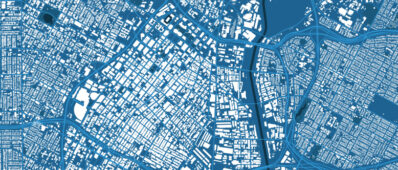
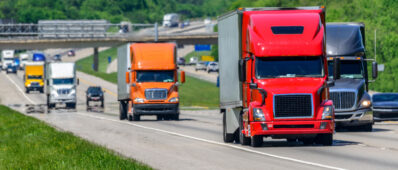
Heavy-duty trucks serve as the backbone of the supply chain and have a tremendous effect on the economy. However, they severely impact the environment and public health. This study presents a novel truck detection framework by combining satellite imagery with Geographic Information System (GIS)-based OpenStreetMap data to capture the distribution of heavy-duty trucks and shipping containers in both on-road and off-road locations with extensive spatial coverage. The framework involves modifying the CenterNet detection algorithm to detect randomly oriented trucks in satellite images and enhancing the model through ensembling with Mask RCNN, a segmentation-based algorithm. GIS information refines and improves the model’s prediction results. Applied to part of Southern California, including the Port of Los Angeles and Long Beach, the framework helps assess the environmental impact of heavy-duty trucks in port-adjacent communities and understand truck density patterns along major freight corridors. This research has implications for policy, practice, and future research.

Suggested Citation
Xingwei Liu, Yiqiao Li, Langting Sizemore, Xiaohui Xie and Jun Wu (2024) “A Deep-Learning Approach to Detect and Classify Heavy-Duty Trucks in Satellite Images”, IEEE Transactions on Intelligent Transportation Systems, pp. 1–16. Available at: 10.1109/TITS.2024.3431452.

working paper

California's Safe Routes to School Program: Impacts on Walking, Bicycling, and Pedestrian Safety

Abstract

Safe Routes to School (SR2S) programs have generated tremendous interest among U.S. policymakers, planners, and public health officials in recent years. These programs target the walk to school as an essential point of intervention to improve pedestrian safety and increase physical activity among children. In this article, we evaluate California’s pioneering SR2S construction program, which was designed to improve safety for children’s walking and bicycling to school, and to increase the number of children who do so, by funding traffic engineering improvements around schools. Through a systematic evaluation of 10 California SR2S traffic improvement projects near elementary schools, we examined the impacts of this influential state policy on children’s travel behavior in these neighborhoods. We investigated changes in the perceived safety of children’s trips to school, in safety-related behaviors tied to the trip to school, and in the number of children walking and bicycling to school following these improvements. The findings have implications for California’s SR2S program and for similar initiatives throughout the country.

working paper

A Discrete Choice Model for Ordered Alternatives

Publication Date

February 1, 1984

Author(s)

Working Paper

UCI-ITS-WP-84-1

Areas of Expertise

Abstract

A generalization of the multinomial logit (MNL) model is developed for cases in which discrete alternatives are ordered so as to induce stochastic correlation among alternatives in close proximity. The model belongs to the Generalized Extreme Value class introduced by McFadden, and is therefore consistent with random utility maximization. If the true model is nearly MNL, iterative estimation on an ordinary MNL computer package provides approximate parameter estimates and a test for the hypothesized failure of the MNL’S “independence from irrelevant alternatives” assumption. A straightforward extension can handle cases where observations have been selected on the basis of a truncated choice set. The model’s properties are investigated through a numerical example, and through two empirical applications whose rather unsatisfactory results are very briefly described.

Suggested Citation
Kenneth A. Small (1984) A Discrete Choice Model for Ordered Alternatives. Working Paper UCI-ITS-WP-84-1. Institute of Transportation Studies, Irvine. Available at: https://escholarship.org/uc/item/2px765z4.

conference paper

Pavement image-processing using neural networks

Applications of advanced technologies in transportation engineering

Publication Date

January 1, 1991

Author(s)

Ms Kaseko, Stephen Ritchie
Suggested Citation
Ms Kaseko and Sg Ritchie (1991) “Pavement image-processing using neural networks”, in . Stephanedes, YJ and Sinha, KC (ed.) Applications of advanced technologies in transportation engineering. AMER SOC CIVIL ENGINEERS, pp. 238–242.

published journal article

Friendship networks

Journal of Regional Science

Publication Date

December 1, 2006

Author(s)

Abstract

This paper develops a model of social networks different from those presented in the recent literature. In contrast to existing models, the level of investment in link formation is a continuous decision variable, and links form stochastically rather than deterministically, with the probability depending on the noncooperative investment choices of both parties. Since the network structure is then stochastic rather than deterministic, the actual pattern of links cannot be specified, as in previous models, with the analysis focusing instead on which links are most likely to form. This alternate approach leads to a much simpler mathematical structure than in previous work. The analysis, which is couched in the context of friendship networks, shows that individual investment in friendship formation is too low. In addition, the analysis shows that, in an asymmetric setting where one individual has personal magnetism or a broad group of acquaintances, friendship links involving this attractive agent are most likely to form.

Suggested Citation
Jan K. Brueckner (2006) “Friendship networks”, Journal of Regional Science, 46(5), pp. 847–865. Available at: 10.1111/j.1467-9787.2006.00486.x.

working paper

Schedules and Queues

Publication Date

September 5, 1983

Author(s)

Amihai Glazer, Refael Hassin

Working Paper

UCI-ITS-WP-83-2

Areas of Expertise

Abstract

In a queuing system that does not serve each customer immediately upon his arrival, a consumer will attempt to arrive at a time that will minimize the expected length of his wait. The consequences of such behavior are explored for a queue with scheduled service. The characteristics of such a system are then compared to one with bulk service, and it is found that scheduled service entails a lower expected waiting time than does bulk service except for very high values of the traffic density.

Suggested Citation
Amihai Glazer and Refael Hassin (1983) Schedules and Queues. Working Paper UCI-ITS-WP-83-2. Institute of Transportation Studies, Irvine. Available at: https://escholarship.org/uc/item/63z2p66w.

working paper

Safety Aspects of Freeway Weaving Sections

Abstract

One source of vehicle conflict is the freeway weaving section, where a merge and diverge in close proximity require vehicles either entering or exiting the freeway to execute one or more lane changes. Using accident data for a portion of Southern California, we examined accidents that occurred on three types of weaving sections defined in traffic engineering: Type A, where every merging or diverging vehicle must execute one lane change, Type B, where either merging or diverging can be done without changing lanes, and Type C, where one maneuver requires at least two lane changes. We found no difference among these three types in terms of overall accident rates for 55 weaving sections over one year (1998). However, there were significant differences in terms of the types of accidents that occur within these types in terms of severity, and location of the primary collision, the factors causing the accident, and the time period in which the accident is most likely to occur. These differences in aspects of safety lead to implications for traffic engineering improvements.

Suggested Citation
Thomas F. Golob, Wilfred W. Recker and Veronica M. Alvarez (2003) Safety Aspects of Freeway Weaving Sections. Working Paper UCB-ITS-PWP-2003-13. Institute of Transportation Studies, Irvine. Available at: https://escholarship.org/uc/item/1zr6p58h.