Skip to content
The Institute of Transportation Studies at UC Irvine
  • About
    • Leadership
    • Affiliated Centers
    • IT Resources
    • ITS-Irvine Policies
    • Contact
  • Research
    • Areas of Expertise
    • Publications
    • Projects
    • Requests for Proposals
    • TRIP Program
    • PRIME Program
  • Education
  • People
    • Researchers
    • Administrative Staff
    • Current Students
    • PhD Graduates
    • Past Faculty Associates
  • Support Us
  • News & Events
    • News
    • Events
  • About
    • Leadership
    • Affiliated Centers
    • IT Resources
    • ITS-Irvine Policies
    • Contact
  • Research
    • Areas of Expertise
    • Publications
    • Projects
    • Requests for Proposals
    • TRIP Program
    • PRIME Program
  • Education
  • People
    • Researchers
    • Administrative Staff
    • Current Students
    • PhD Graduates
    • Past Faculty Associates
  • Support Us
  • News & Events
    • News
    • Events

Sponsor: SB1

Improving Transportation System Resilience with Shared Automated Vehicles

Status

Complete

Project Timeline

September 25, 2023 - April 30, 2025

Principal Investigator

Michael HylandMichael Hyland

Project Team

Ritun Saha, Yufan Yang

Sponsor, Program & Award Number

SB1 // STRP Faculty Research: 2024-34
(Also see the UC ITS page)

Areas of Expertise

Infrastructure Delivery, Operations, & Resilience

Team Departmental Affiliation

Civil and Environmental Engineering

Project Summary

Transportation systems are critical to the daily lives of Californians. However, disruptions to transportation services (e.g., bus or train breakdowns) and damage to infrastructure (e.g., pavement or bridge collapses) can significantly impact a community's mobility and economic well-being. The response of traditional transportation systems to disruptive events relies heavily on decisions made by system employees (e.g., transit operators and bus drivers), who are constrained by limited resources. In addition, repairing damaged infrastructure tends to have long response latencies (especially during non-working hours) and repair times. Therefore, there is an urgent need to explore new options that can enhance the resilience of transportation systems under resource and information constraints. This project will investigate how shared automated vehicles (SAVs) might be used to enhance the resilience of transportation systems in California communities. Specifically, the study will explore the potential advantages and challenges of employing SAVs to maintain essential mobility services and expedite infrastructure recovery following disruptions. For instance, when buses or trains break down, SAVs can alleviate service interruptions by providing options to passengers who rely on public transit. In situations where roads or bridges are damaged, SAVs can safely transport repair teams from their homes to the affected areas, eliminating the need for human drivers. The research team will develop a comprehensive modeling framework for SAVs that deliver critical services during disruptions. Additionally, this framework will be tested through case studies in Santa Clara County.

Related Publications

policy brief | Aug 2025

Leveraging Robotaxis to Support Transit Riders in Emergencies

Read more

ZEV transition in California’s construction industry

Status

Complete

Project Timeline

September 25, 2023 - December 31, 2025

Principal Investigator

Jean-Daniel Saphores

Project Team

Shakib Kafashan, Sabah Hossain Iqra, Ryan Harner, Farzana Khatun

Sponsor, Program & Award Number

SB1 // STRP Faculty Research: 2024-39
(Also see the UC ITS page)

Areas of Expertise

Zero-Emission Vehicles & Low-Carbon Fuels

Team Departmental Affiliation

Civil and Environmental Engineering

Project Summary

Globally, the construction industry is responsible for 10% of the greenhouse gas emissions (GHG) produced by human activities. In California, off-road construction equipment is the second-largest contributor to off-road GHGs. The electrification of construction equipment holds promise not only in reducing GHGs but also in curbing air pollution (specifically PM2.5 and NOx emissions), mitigating noise pollution, and minimizing disruptive vibrations, which is of particular significance in densely populated urban areas. However, a key obstacle in transitioning construction equipment to zero emissions, whether on-road or off-road, is the need to establish reliable, high-voltage charging infrastructure at various locations. This infrastructure must be accessible not only at fixed sites like depots and maintenance facilities but also on dynamic construction sites. This project will investigate strategies for establishing and utilizing charging infrastructure for both on-road and off-road construction equipment in California. To achieve this, the researchers will conduct interviews with leading construction rental companies in the United States, survey battery-electric construction equipment manufacturers, collaborate with contractors, survey California's power utilities, consult with the California Air Resources Board, and examine international experiences in promoting battery-electric construction equipment, primarily in Europe. The findings from this project will assist California in formulating suitable policies for transitioning to zero-emission construction equipment and in effectively managing infrastructure projects in collaboration with the industry.

Balancing Fares and Demand: Exploring Pricing Strategies for Microtransit and Fixed-Route Transit

Status

Complete

Project Timeline

October 1, 2024 - September 30, 2025

Principal Investigator

Michael HylandMichael Hyland

Project Team

Ritun Saha, Yufan Yang

Sponsor, Program & Award Number

SB1 // STRP Faculty Research: 2025-24
(Also see the UC ITS page)

Areas of Expertise

Zero-Emission Vehicles & Low-Carbon Fuels

Team Departmental Affiliation

Civil and Environmental Engineering

Project Summary

Fares for both conventional fixed-route transit (FRT) and microtransit significantly impact demand, traveler costs, and transit agency revenues. While crowding is typically not an issue for most FRT systems in California, microtransit’s smaller vehicles make it more prone to “crowding,” where demand temporarily exceeds service capacity. This can result in long wait times or service rejections, especially during peak periods. Fares can help manage peak demand, but fare increases can be controversial, as many users rely on transit for essential travel. This study will explore the effects and trade-offs of various fare levels (e.g., $2, $5, $10) and fare structures (e.g., flat, distance-based, time-of-day-based, or means-tested discounts) on microtransit and integrated systems combining microtransit with FRT. The research team will evaluate factors such as transit revenues, ridership by mode, subsidies per trip, traveler costs, wait times, rejection rates, travel times, mode share, vehicle miles traveled, and other key metrics.

Related Publications

policy brief | Jan 2026

Peak Pricing and Transfer Discounts Can Make Microtransit More Efficient

Read more
Preprint Journal Article | Aug 2025

Optimal Fare Policy and Fleet Sizing for an Integrated Fixed-Route Transit and Microtransit System

Read more
presentation | Oct 2025

Optimal Fare Policy and Fleet-sizing for Integrated Fixed and Microtransit Systems

Read more

Finding Community-based Solutions to Mobility Barriers Faced by Families in Semi-rural Antelope Valley, California

Status

Complete

Project Timeline

October 1, 2024 - September 30, 2025

Principal Investigator

Elisa BorowskiElisa Borowski

Project Team

Mahbuba Chowdhury

Sponsor, Program & Award Number

SB1 // STRP Faculty Research: 2025-23
(Also see the UC ITS page)

Areas of Expertise

Public Transit, Shared Mobility, & Active Transportation

Team Departmental Affiliation

Civil and Environmental Engineering

Project Summary

Located in semi-rural Antelope Valley, California, Ohana Center is a non-profit community center that provides resources and support to families in need. The mobility challenges experienced by these families include unreliable and sparse public transit, financial burdens, time demands, and lack of social support. These barriers may contribute to further social isolation, lower likelihood of participating in family leisure activities, and missing prenatal, maternal, and pediatric healthcare appointments. To address these challenges, Ohana Center has included mobility incentives, like providing gas vouchers. While these community-led solutions may facilitate care-related trips for families in need, they are currently short-term solutions. In partnership with the Ohana Center, this research project will conduct a series of surveys and workshops with Black, Indigenous, and People of Color (BIPOC) caregivers who utilize Ohana Center services to learn more about their challenges related to completing care-related trips, their experiences with various community-led mobility initiatives, and their hopes for new public mobility services and programs in Antelope Valley. Transcripts from the workshops will be analyzed to identify themes and community-expressed needs. Findings will be interpreted in collaboration with the Ohana Center to inform future mobility initiatives and solutions.

Related Publications

policy brief | Dec 2025

Understanding How Caregivers Travel Can Help Strengthen Families and Inform More Equitable Transportation Policies

Read more
Preprint Journal Article | Sep 2025

Determinants of Mode Choice and Forgoing Travel for Mobility-of-Care Trips by Caregivers in California

Read more

Co-Location of Light-Duty and Heavy-Duty Zero-Emission Vehicle Infrastructure to Promote a Resilient, Cost-Effective Fueling Network in California

Status

Complete

Project Timeline

October 1, 2024 - September 30, 2025

Principal Investigator

Scott Samuelsen

Project Team

Kate Forrest

Sponsor, Program & Award Number

SB1 // STRP Faculty Research: 2025-27
(Also see the UC ITS page)

Areas of Expertise

Freight, Logistics, & Supply Chain Zero-Emission Vehicles & Low-Carbon Fuels

Team Departmental Affiliation

Mechanical and Aerospace Engineering

Project Summary

To achieve its climate and air quality goals, California has adopted aggressive zero-emission vehicle adoption goals. The main challenge facing the transition to ZEVs is in establishing a robust network of charging and hydrogen refueling infrastructure. Effective planning and deployment of stations is crucial in enabling the market for ZEVs. This creates a need for a spatial optimization tool in which stations are chosen to maximize coverage of charging and refueling demand. Furthermore, the co-location of light-duty and heavy-duty stations can accelerate ZEV adoption, reduce total number of stations while maintaining network resiliency, and reduce overall network cost by leveraging economies of scale and increasing individual station utilization. The proposed study will develop an infrastructure rollout plan for co-located LD and HD charging and hydrogen refueling stations to meet California’s ambitious carbon neutrality transportation goals by 2045.

Understanding Post-Pandemic Travel Behavior Patterns and Trends in California

Status

In Progress

Project Timeline

October 1, 2024 - December 31, 2025

Principal Investigator

Jean-Daniel Saphores

Project Team

Sabah Hossain Iqra, Llorenc Miquel I Solé

Sponsor, Program & Award Number

SB1 // STRP Faculty Research: 2025-25
(Also see the UC ITS page)

Areas of Expertise

Travel Behavior, Land Use, & the Built Environment

Team Departmental Affiliation

Civil and Environmental Engineering

Project Summary

COVID-19 has reshaped people's mobility patterns worldwide (Arellana et al., 2020; Hensher et al., 2021; Orro et al., 2020; Park, 2020), including in the US (Brough et al., 2021; Ehsani et al., 2021; Hu and Chen, 2021; Kim and Kwan, 2021; Liu et al., 2020). Public transit and transportation network companies (TNCs) were hit particularly hard (Du and Rakha, 2020; Khatun and Saphores, 2023). For example, San Francisco experienced a staggering 94% drop in transit ridership during the lockdown (Toussaint, 2020), and an 87% drop in Uber trips in April-May 2020 compared to early 2020 (Brown and Williams, 2023). Many public policies that aim to reduce solo driving, congestion, and vehicle emissions, and increase walking, biking, and shared mobility are based on pre-pandemic travel behaviors. However, higher levels of working from home, streaming, e-shopping, and micro-mobility options post-pandemic have changed travel behavior. How does post-pandemic household travel patterns differ from their pre-pandemic values? Do the policies and plans that aim to advance California’s mobility, environmental, and equity goals warrant review and possible amendment? The purpose of this project is to answer these questions and to analyze the potential impacts of changes in household travel on the California Transportation Plan 2050.

Reassessing Traffic Safety: Implications of Infrastructure and Traffic Enforcement on Creating Safe Streets and Racial Justice

Status

In Progress

Project Timeline

October 1, 2022 - December 31, 2025

Principal Investigator

Avipsa Roy

Project Team

Shengxiang Jin

Sponsor, Program & Award Number

SB1 // STRP Faculty Research: 2023-03
(Also see the UC ITS page)

Areas of Expertise

Safety, Public Health, & Mobility Justice

Team Departmental Affiliation

Urban Planning and Public Policy

Project Summary

Dying in a traffic crash was the fourth leading cause of death in 2019. California streets have recently gotten safer with declines in both the absolute number and share of pedestrian crashes, but still saw a pedestrian fatality rate of 2.44 per 100,000 people in 2021, higher than the national average. City governments, Caltrans, and the US have begun to implement a Safe System approach to address the crisis, which involves data-driven safety analysis combined with improved street design, improving safety culture, and enforcement of traffic laws. While this approach often identifies disadvantaged communities as sites for targeted infrastructure interventions, these communities are also disproportionately impacted by police enforcement. This project seeks to quantify the nature of safety and enforcement disparities to understand the net benefits or burdens of this multipronged approach to safety. Research results may help support changes in Safe System implementation and provide evidence for the need to continually address racial disparities in police enforcement, data collection and support for alternative enforcement strategies, such authorizing speed cameras. The research will focus on three related questions about the relationship of traffic safety to infrastructure and traffic enforcement in the context of racial disparities: (1) the extent of racial disparities in traffic enforcement, (2) the relative effectiveness of street infrastructure and enforcement on traffic safety, and (3) the relationships between reported and unreported crashes and implications for equity. The researchers will examine these questions in three case study cities in California: Los Angeles, Oakland, and San Jose, all of which have Vision Zero strategies and have data available about the race of people involved in traffic stops. They will use data from the state’s Racial and Identity Profiling Act (RIPA) database of police stops, the Statewide Integrated Traffic Records System (SWITRS) crash data, and crowdsourced data from Bikemaps.org to estimate spatial models for crash outcomes accounting for neighborhood

Balancing Building and Electric Vehicle Energy Needs: A Study on Bi-Directional and Managed Workplace Charging

Status

Complete

Project Timeline

October 1, 2024 - December 31, 2025

Principal Investigator

Matt DeanMatthew Dean

Project Team

Amin Akbari

Sponsor, Program & Award Number

SB1 // STRP Faculty Research: 2025-22
(Also see the UC ITS page)

Areas of Expertise

Safety, Public Health, & Mobility Justice Travel Behavior, Land Use, & the Built Environment

Team Departmental Affiliation

Civil and Environmental Engineering

Project Summary

Many Californians commute by car, parking for several hours at work—an ideal time to charge electric vehicles when solar power is abundant. However, employers may hesitate to install workplace chargers if electric vehicle charging overlaps with peak building energy demand, raising utility costs. Bi-directional and managed charging, which balances building and transportation energy needs, could address the needs of electric vehicle commuters and businesses. This research seeks to answer: Which employees, and under what conditions, will accept bi-directional and managed charging? How does acceptance change with program design? How can the economic benefits be fairly shared between employees and employers? How much bi-directional charging capacity is needed for different workplaces across California? The project will conduct a behavioral study, using a web-based survey and discrete choice experiment, to understand electric vehicle owners' preferences for various program features like cost, range, and guaranteed minimum range. Based on employee acceptance, the project will optimize electric vehicle charging to estimate the number of chargers needed in different workplaces. This will guide businesses in designing cost-effective charging programs that meet employee needs, benefit employers, and support California’s clean energy goals.

Related Publications

policy brief | Mar 2026

Making Workplace Charging Work: What Employees Value in Managed and Bidirectional Programs

Read more

Analysis of Large Truck Crashes in California

Status

In Progress

Project Timeline

October 1, 2024 - September 30, 2026

Principal Investigator

Stephen Ritchie

Project Team

Youngeun Bae, Craig Rindt

Sponsor, Program & Award Number

SB1 // STRP Faculty Research: 2025-21
(Also see the UC ITS page)

Areas of Expertise

Freight, Logistics, & Supply Chain Safety, Public Health, & Mobility Justice

Team Departmental Affiliation

Civil and Environmental Engineering

Project Summary

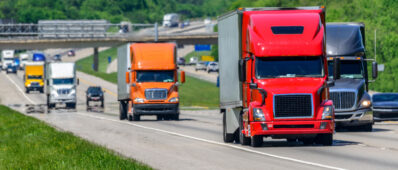
Large trucks are indispensable for freight transportation and economic growth, but create notable safety challenges on roadways. In California, despite representing only 2.5% of the vehicle population and 5.6% of vehicle miles traveled, large trucks accounted for 9.1% of fatal crashes in 2020, causing 372 deaths and 8,350 injuries. Existing studies on truck crashes in California are outdated or limited in scope. Furthermore, research addressing truck crashes in disadvantaged communities is lacking. This project aims to fill these knowledge gaps by conducting a comprehensive exploratory analysis of large truck crashes using recent databases, including the Highway Safety Information System, the Motor Carrier Management Information System, the Statewide Integrated Traffic Records System, and CalEnviroScreen. The research will focus on two primary objectives: 1) understanding the factors associated with the frequency and severity of large truck crashes in California, and 2) examining the disparities in crash rates and severity between disadvantaged communities and other regions. Employing exploratory analysis techniques, supplemented by potential statistical modeling, the research team will investigate diverse factors, including vehicle, driver, trucking company, infrastructure, and environmental attributes.

Enhancing Automated Vehicle Braking for Human Compatibility

Status

In Progress

Project Timeline

September 1, 2025 - September 30, 2026

Principal Investigator

Wenlong Jin

Sponsor, Program & Award Number

SB1 // STRP Faculty Research: 2026-07

Areas of Expertise

Intelligent Transportation Systems, Emerging Technologies, & Big Data

Team Departmental Affiliation

Civil and Environmental Engineering

Project Summary

Current automated vehicle braking systems often feel unnatural to human drivers. This project improves safety algorithms known as Control Barrier Functions to produce smoother, more human-like braking while maintaining strict safety guarantees. The team will analyze real driving data, develop enhanced models, and test them through simulation to support safer, more comfortable integration of AVs into mixed traffic.

Posts navigation

Older posts
Newer posts
When autocomplete results are available use up and down arrows to review and enter to go to the desired page. Touch device users, explore by touch or with swipe gestures.

Recent Posts

  • TRIP Student Spotlight: Kai Friedrich
  • PRIME Student Spotlight: Ryan Shaffie
  • TRIP Student Spotlight: Charlotte Dunlap
  • PRIME Student Spotlight: Kingston Wu
  • Faculty Spotlight: Dr. Michael Hyland

Recent Comments

No comments to show.

Archives

  • June 2026
  • January 2026
  • November 2025
  • October 2025
  • September 2025
  • August 2025
  • July 2025
  • June 2025
  • May 2025
  • February 2025
  • January 2025
  • October 2024
  • September 2024
  • August 2024
  • July 2024
  • June 2024
  • May 2024
  • April 2024
  • February 2024
  • December 2023
  • November 2023
  • September 2023
  • April 2023
  • November 2022
  • October 2022
  • September 2022
  • May 2022
  • April 2022
  • March 2022
  • February 2022
  • January 2022
  • November 2021
  • October 2021
  • August 2021
  • April 2021
  • January 2021
  • December 2020
  • November 2020
  • August 2020
  • July 2020
  • June 2020
  • May 2020
  • April 2020
  • March 2020
  • February 2020
  • January 2020
  • December 2019
  • November 2019
  • May 2019
  • April 2019
  • February 2019
  • January 2019
  • December 2018
  • November 2018
  • October 2018
  • September 2018
  • May 2018
  • April 2018
  • March 2018
  • February 2018
  • January 2018

Categories

  • Award
  • News
  • Research in Motion
  • Spotlight

Anteater Instruction and Research Bldg (AIRB)
Irvine, CA 92697
Phone: 949-824-5989 | Fax: 949-824-8385

  • linkedin
Subscribe to the ITS- Irvine mailing list Subscribe to Events Calendar

About

  • Leadership
  • Affiliated Centers
  • ITS-Irvine Policies
  • Contact Us

Research

  • Areas of Expertise
  • Publications
  • Projects
  • Requests for Proposals

People

  • Researchers
  • Administrative Staff
  • Current Students
  • PhD Graduates
  • Past Faculty Associates

Press

  • News
  • Events

©2026 ITS-Irvine