published journal article
Real-time freeway level of service using inductive-signature-based vehicle reidentification system
IEEE Trans. Intell. Transport. Syst.
Publication Date
June 1, 2005
published journal article
published journal article

working paper
With modern multivariate statistical methods and activity-diary (time-use) data sets, it is possible to model household mobility decisions as being derived from decisions to participate in activities at various locations. We show how this can be accomplished by specifying activity participation by activity type and location as endogenous variables, with a simple locational distinction of “at home” versus “out of home.” The activity participation variables are then combined in a model system of simultaneous equations with variables that measure mobility demand: travel times by mode, household vehicle ownership and household vehicle utilization. We specify the model in terms of latent, multivariate normally distributed choice variables, and this treatment solves estimation problems associated with censored and ordinal observed endogenous variables. The estimation method provides accurate goodness-of-fit model evaluation and hypothesis testing. Results are shown from a model estimated using two-day activity diary data for male and female household heads and associated accessibility data collected in the Portland, Oregon, U.S.A. Metropolitan Area in 1994. The model system can be used in conjunction with conventional travel demand models, to provide forecasts of the effects of factors such as accessibility and in-home work, on travel demand by mode, car ownership, and car vehicle miles of travel. This type of model system has the potential of replacing some existing demand forecasting models.
 working paper |
Dec 1994
working paper |
Sep 1994
working paper |
Dec 1994
working paper |
Sep 1994
 working paper |
Oct 1993
working paper |
Jan 1997
working paper |
Oct 1993
working paper |
Jan 1997
 book/book chapter |
Oct 1998
book/book chapter |
Oct 1998
MS Thesis
The purpose of this thesis is to study the feasibility and effectiveness of different feedback methods as applied to Miasma Beach Project. There are two methods of feedback, direct and averaging link volumes via MSA, each with and without averaging of OD volumes, totally is four methods, are introduced to the Four-Step Model based on Miasma Beach Project. Also, the RMSE of link flow and OD matrix, and VHT value are in use to measure the result of each feedback solution. After compared the result and confirmed the “true solution” of the model, a short conclusion of is drawn. It’s very clear that any approach to feedback makes significant corrections to the FSM result, the model consistency is much improved
working paper
We present in this paper a new car-following theory that can reproduce both the so-called capacity drop and traffic hysteresis, two prominent features of multiphase vehicular traffic flow. This is achieved through the introduction of a single variable, driver response time, that depends on both vehicle spacing and traffic phase. By specifying different functional forms of response time, one can obtain not only brand new theories but also some of the well-known old car-following theories, which is demonstrated in this paper through both theoretical analyses and numerical simulation.
MS Thesis
Phd Dissertation
Efficient freight transportation is essential for a strong economic system. Increases in demands for freight transportation, however, lessens the efficiency of existing infrastructure. In order to alleviate this problem effectively, evaluation studies must be performed in order to invest limited resources for maximum social benefits. In addition to many difficulties related to evaluating individual projects, complimentary and substitution effects that occur when considering transportation projects together must be properly accounted for. Current practices, however, limit the number of projects that can feasibly be considered at one time. This dissertation proposes network design models which can automatically create project combinations and search for the best of these. Network design models have been studied for the passenger movements and focus on highway expansions. In this dissertation, the focus is shifted to freight movements which involve multimodal transportation improvements. A freight network design model is developed based on a bi-level optimization model. The development then involves two components. The first task is to set the freight investment problems within the bi-level format. This includes finding a suitable freight flow prediction model which can work well with the bi-level model. The second task is to provide a solution algorithm to solve the problem. The dissertation sets the framework of the freight flow network design model, identifies expected model issues, and provides alternatives that alleviate them. Through a series of developments, the final model uses a shipper-carrier freight equilibrium model to represent freight behaviors. Capacity constraints are used as a means to control service limitations since reliability issues, an important factor for freight movements, cannot be captured by steady state traffic assignment. A case study is implemented to allocate a budget for improvements on the California highway network. The transportation modes are selected by the shipper model which can include truck, rail, or multimodal transportation. The results shown that the proposed network design model provides better solutions compared with traditional ranking methods. The solution algorithm can manage the problem with a reasonable number of project alternatives.
published journal article
Background: Although numerous epidemiologic studies now use models of intraurban exposure, there has been little systematic evaluation of the performance of different models. Objectives: In this present article we proposed a modeling framework for assessing exposure model performance and the role of spatial autocorrelation in the estimation of health effects. Methods: We obtained data from an exposure measurement substudy of subjects from the Southern California Children’s Health Study. We examined how the addition of spatial correlations to a previously described unified exposure and health outcome modeling framework affects estimates of exposure-response relationships using the substudy data. The methods proposed build upon the previous work, which developed measurement-error techniques to estimate long-term nitrogen dioxide exposure and its effect on lung function in children. In this present article, we further develop these methods by introducing between- and within-community spatial autocorrelation error terms to evaluate effects of air pollution on forced vital capacity. The analytical methods developed are set in a Bayesian framework where multistage models are fitted jointly, properly incorporating parameter estimation uncertainty at all levels of the modeling process. Results: Results suggest that the inclusion of residual spatial error terms improves the prediction of adverse health effects. These findings also demonstrate how residual spatial error may be used as a diagnostic for comparing exposure model performance.
published journal article
Planning decisions involving urban freeways have drastically affected American cities by reconfiguring urban form, supplanting neighborhoods, displacing tens of thousands of people, and costing billions of dollars. New laws governing the planning and construction of new freeways were passed that required projects to factor in maximum sensitivity to environmental effects, concern for relocating displaced residents, and active citizen participation. This article reviews the evolution of freeway design in response to significant social changes in the United States, and examines changes in the rgulatory environment of freeway construction. The article describes three famous cases of urban freeway controversies in Los Angeles, Memphis, and Syracuse which have distinct histories and outcomes. From these cases it can be concluded that the past mode of highway planning was too narrow and now multimodal transportation planning involving the equal partnership of trasportation planners, land use planners, urban planners, and urban designers should be utilized.
working paper
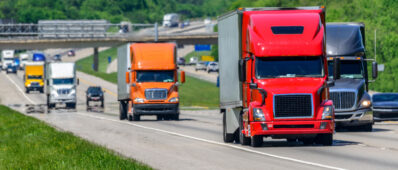
Data associated with over 9000 accidents involving large trucks and combination vehicles during a two-year period on freeways in the greater Los Angeles area are analyzed relative to collision factors, accident severity, incident duration, and lane closures. Relationships between type of collision and accident characteristics are explored using log-linear models. The results point to significant differences in several immediate consequences of truck-related freeway accidents according to collision type. These differences are associated both with the severity of the accident, in terms of injuries and fatalities, and the impact of the accident on system performance, in terms of incident duration and lane closures. Hit-object and broadside collisions are the most severe types in terms of fatalities and injuries, respectively, and single-vehicle accidents are relatively more severe than two-vehicle accidents. The durations of accident incidents are found to be log-normally distributed for homogeneous groups of truck accidents, categorized according to type of collision and, in some instances, severity. The longest durations are typically associated with overturns.