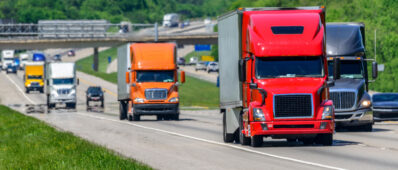
published journal article

From Diesel to Electric: Potential of Drayage Trucks Transition in Southern California

iScience

Abstract

Battery electric drayage trucks (BEDTs) offer an opportunity to decarbonize the drayage fleets. This paper analyzes the potential of BEDTs using data on 1,051 drayage trucks in Southern California. A methodology is developed to evaluate energy and charger requirements across singleton, small, and large fleets. This study assesses the fraction of trucks that can be electrified using battery sizes from 100 to 1000 kWh. Our analysis reveals decreasing uncertainties for fleet electrification with increasing battery size and with offsite charging involved. Combining an 800-kWh battery with both depot and offsite charging using 350 kW chargers, approximately 95% of diesel drayage trucks can be electrified. However, singleton fleets demonstrate the lowest performance and experience substantial improvements by offsite charging. Preferred locations for depot and off-site chargers are identified near the Ports of Long Beach and Los Angeles, and the City of Ontario. These results provide essential guidance for electrifying drayage trucks.

Suggested Citation
Guoliang Feng, Craig Ross Rindt and Stephen G. Ritchie (2025) “From Diesel to Electric: Potential of Drayage Trucks Transition in Southern California”, iScience, p. 112629. Available at: 10.1016/j.isci.2025.112629.

conference paper

Trucking industry demand for information technology : A multivariate discrete choice model

Proceedings of the 79th annual meeting of the transportation research board

Publication Date

January 1, 2000

Abstract

The objective of this research is to understand the demand for information technology among trucking companies. A multivariate discrete choice model is developed using data from a large-scale survey of the trucking industry in California. Nineteen characteristics of trucking operations were found to be significant in explaining demand for seven different information technologies ranging from automatic vehicle location systems to vehicle routing and scheduling software. The model is designed to estimate the influences of each of the nineteen operational characteristics on the propensity to adopt each of the seven different information technologies, while simultaneously allowing the seven error terms to be freely correlated. Results showed that the distinction between for-hire and private fleets is paramount, as is the provision of intermodal maritime and air services. Use of satellite communication was also strongly related to average length of loaded movements, while use of automatic vehicle location systems (AVL) was predicted by provision of refrigerated and hazardous materials transport. Propensity to use automatic vehicle identification (AVI) transponders is predicted by provision of general truckload service and size of operation. Use of electronic data interchange (EDI) is predicted by provision of refrigerated and hazardous goods services and is higher among both large and small fleets

Suggested Citation
Thomas F. Golob and Amelia C. Regan (2000) “Trucking industry demand for information technology : A multivariate discrete choice model”, in Proceedings of the 79th annual meeting of the transportation research board, p. 25 p..

working paper

The Negative Energy Impact of Modern Rail Transit Systems

Publication Date

September 1, 1976

Author(s)

Working Paper

UCI-ITS-WP-76-1

Areas of Expertise

Abstract

It has always seemed obvious that substantial energy savings could be realized by diverting commuters from cars onto rail transit. In fact, the wisdom of this idea has appeared so self-evident, to so many people, that is has been little examined. The only direct analysis (1), calculated the energy-cost of various kinds of transit construction and concluded that the United States could save energy by diverting investment from highways to rail transit. Those conclusions were based on three implicit assumptions, but a reasonable modification of those assumptions produces a directly opposite conclusion. Their unstated assumptions were: 1. that Congress often acts as if the expenditure of construction money were an end in itself (while I will assume that the expenditure should be evaluated in terms of the passenger-services it produces); 2. that engineering capacity measures are appropriate for estimating patronage (while I will use observed behavioral data because there is little evidence to support the continued hope that the public’s demonstrated dislike of “public transit” can be altered to any significant degree (2)); 3. that modern rail systems would have similar energy characteristics to existing rail systems (but data which became available after their article make it clear that modern systems are actually much less efficient (3)). My analysis uses data from the San Francisco Bay Area Rapid Transit system (BART), and evidence is presented to show that BART is typical of modern rail systems. I shall first concentrate on the construction energy relationship and will show that for a standarized measure of services, passenger-miles, freeway construction is much more energy efficient than rail transit construction. I will then show that viewed as a total system–looking at the energy involved in propulsion, building automobiles and other transit vehicles, and right-of-way construction–BART should never have been built in the first place if energy saving was the only goal.

Suggested Citation
Charles A. Lave (1976) The Negative Energy Impact of Modern Rail Transit Systems. Working Paper UCI-ITS-WP-76-1. Institute of Transportation Studies, Irvine. Available at: https://escholarship.org/uc/item/7hw4w6c0.

other

Getting Heavy-Duty Vehicle Fleets to Net-Zero

Transfers Magazine

Abstract

Heavy-duty vehicle fleet owners in California face a variety of motivators and barriers to adopting alternative fuels for their fleets.

Suggested Citation
Youngeun Bae (2023) “Getting Heavy-Duty Vehicle Fleets to Net-Zero”, Transfers Magazine. Available at: https://transfersmagazine.org/magazine-article/issue-11/getting-heavy-duty-vehicle-fleets-to-net-zero/ (Accessed: October 5, 2023).

published journal article

Social and spatial distribution of soil lead concentrations in the City of Santa Ana, California: Implications for health inequities

Science of The Total Environment

Publication Date

November 15, 2020

Author(s)

Shahir Masri, Alana LeBrón, Michael Logue, Enrique Valencia, Abel Ruiz, Abigail Reyes, Jean M. Lawrence, Jun Wu

Abstract

Background Lead (Pb) exposure is a problem that disproportionately impacts low-income communities and communities of color. We applied a community-based participatory research approach to assess the distribution of soil Pb concentrations and related social vulnerabilities across Census tracts in Santa Ana, CA. Methods Soil Pb samples (n = 1528) were collected by the ¡Plo-NO! Santa Ana! Lead-Free Santa Ana! partnership in 2018 across Santa Ana, CA, at a high spatial resolution and measured using XRF analysis. Pb concentrations were mapped and spatial interpolation was conducted to generate a continuous smoothed map of soil Pb concentrations across the city. American Community Survey data was used to examine Pb across Census tracts based on social and economic factors, and to allow for the development of a Cumulative Risk Index to identify areas at high risk of health impacts. Results Soil Pb concentrations varied by landuse type and socioeconomic factors. Census tracts with a median household income below $50,000 had over five times higher soil Pb concentrations than high-income Census tracts. Soil samples collected in tertiles with the highest percent children, residents without health insurance, renter-occupied housing units, and lowest percent college educated residents had 90.0%, 96.1%, 75.2%, and 87.0% higher Pb concentrations on average, respectively, compared to their counterparts. Overall, 52.7% of residential samples had Pb concentrations in excess of the 80 ppm California EPA recommendation, and 11 Census tracts were characterized as high risk according to our Cumulative Risk Index. Discussion This study underscores the need for precautionary measures relating to disturbances of the soil, particularly for areas where children play outside, given children’s higher absorption of lead. It also informs environmental justice initiatives and identifies vulnerable subpopulations at greater risk of Pb exposure, thus warranting community-driven recommendations for policies and initiatives to remediate soil Pb and protect public health and health equity.

Suggested Citation
Shahir Masri, Alana LeBrón, Michael Logue, Enrique Valencia, Abel Ruiz, Abigail Reyes, Jean M. Lawrence and Jun Wu (2020) “Social and spatial distribution of soil lead concentrations in the City of Santa Ana, California: Implications for health inequities”, Science of The Total Environment, 743, p. 140764. Available at: 10.1016/j.scitotenv.2020.140764.

published journal article

Sprawl and blight

Journal of Urban Economics

Publication Date

March 1, 2011

Author(s)

Jan Brueckner, Robert W. Helsley

Abstract

The objective of this paper is to show how the same market failures that contribute to urban sprawl also contribute to urban blight. The paper develops a simple dynamic model in which new suburban and older central-city properties compete for mobile residents. The level of housing services generated by older properties depends on current maintenance or reinvestment expenditures. In this setting, market failures that reduce the cost of occupying suburban locations, thus leading to excessive suburban development, also depress central-city housing prices and undermine maintenance incentives, leading to deficient levels of central-city reinvestment. Corrective policies that shift population from the suburbs to the center result in higher levels of reinvestment in central-city housing, therefore reducing blight. (C) 2010 Elsevier Inc. All rights reserved.

Suggested Citation
Jan K. Brueckner and Robert W. Helsley (2011) “Sprawl and blight”, Journal of Urban Economics, 69(2), pp. 205–213. Available at: 10.1016/j.jue.2010.09.003.

conference paper

Parametric evaluation for route guidance systems with analysis of sustainable driver compliance

TRANSPORTATION NETWORK MODELING 2001: PLANNING AND ADMINIATRATION

Publication Date

January 1, 2001

Abstract

A framework is developed to parametrically evaluate networks under user equilibrium route guidance (UERG) and system optimal route guidance (SORG), assuming that the unguided traffic is in stochastic user equilibrium. The framework can determine in what condition an advanced traveler information system performs well and which route guidance state performs better as the market penetration of guidance systems increases. Unlike other studies that assumed a fixed number of compliant drivers, this study explicitly considers compliance rate as an endogenous variable in a general parametric nonlinear programming framework. Under endogenously determined compliance rate, SORG may result in a higher total system cost than UERG because of a lower compliance rate, even though SORG aims to minimize total system cost. In contrast, even though UERG is generally preferable because of higher acceptance, it may result in increased total system cost under certain conditions. A simple network is used to illustrate the application of the framework and show that the performance of route guidance is highly dependent on the level of unguided drivers’ familiarity with the network. A significant part of the framework is the scheme to find “sustainable” compliance rates under assumed compliance function.

Suggested Citation
JS Oh, R Jayakrishnan, A Chen and H Yang (2001) “Parametric evaluation for route guidance systems with analysis of sustainable driver compliance”, in TRANSPORTATION NETWORK MODELING 2001: PLANNING AND ADMINIATRATION. TRANSPORTATION RESEARCH BOARD NATL RESEARCH COUNCIL / Transportat Res Board (Transportation research record), pp. 18–27.

published journal article

Abstract C068: Association between outdoor air pollution and risk of malignant and benign brain diseases: The Multiethnic Cohort Study

Cancer Epidemiology, Biomarkers & Prevention

Publication Date

June 1, 2020

Author(s)

Anna H Wu, Jun Wu, Chiuchen Tseng, Johnny Yang, Salma Shariff-Marco, Veronica W Setiawan, Shahir Masri, Jennifer Jain, Jacqueline Porcel, Scott Fruin, Timothy Larson, Florence Hofman, Thomas Chen, Loic Le Marchand, Daniel Stram, Beate Ritz, Iona Cheng

Abstract

Background: The etiology of malignant brain cancer remains largely unknown. The two established risk factors, ionizing radiation and a history of allergies or atopic disease, explain less than 10% of the disease. In 2012, the International Agency for Research on Cancer classified air pollution and particulate matter (PM) as carcinogenic to humans (Group 1). The carcinogenic effects of air pollution may reach the brain via the systemic circulation, crossing the blood-brain barrier. There are increasing concerns about the potential impact of air pollution on outcomes of central nervous system (CNS), including chronic brain inflammation and microglia cell activation, but evidence of its carcinogenic effects is still limited. Methods: Kriging interpolation of air pollution data from monitoring stations were used to estimate long-term exposures of particulate matter pollutants (PM2.5, PM10), gaseous pollutants (oxides of nitrogen (NOx, NO2), ozone (O3), carbon monoxide (CO), and air toxics (benzene) for 103,308 men and women from the Multiethnic Cohort, residing largely in Los Angeles County from recruitment (1993-1996) at age 45-75 through 12/31/2013. Cox proportional hazards models were used to examine the associations between time-varying air pollutant levels and risk of malignant brain cancer (95 men, 116 women) and meningioma (130 men, 425 women) with adjustment for sex, race/ethnicity, neighborhood socioeconomic status, smoking, occupation, and other covariates. Stratified analyses were conducted by sex and race/ethnicity (African Americans, Japanese Americans, Latinos, Whites). Results: In men and women combined, risk of malignant brain cancer appeared to be increased in association with higher exposure to benzene (per 1 ppb HR=1.68, 95% CI:1.00-2.83), O3 (per 10 ppb HR=1.54, 95% CI: 0.95-2.51) and PM10(per 10 μg/m3 HR=1.24, 95% CI: 0.84-1.82) Malignant brain cancer associations with benzene (P=0.002) as well as PM10 (P=0.03) were driven by the results in men, although the interaction by sex did not reach statistical significance. Brain cancers in Latino men and women accounted for about half of the number of malignant brain cancers in this analysis. Subgroup analyses suggested stronger associations of risk of malignant brain cancer and exposure to PM10 (P=0.03), O3 (P=0.01), and benzene (P=0.03) in Latino men but not in Latino women. There were no significant associations between air pollution and risk of meningioma, except for a positive association with O3 exposure (P=0.04) in men. Conclusions: To our knowledge, this is one of the first studies of air pollution and malignant and benign brain cancers to include large numbers of nonwhites and to examine risk patterns by sex. The stronger findings in Latino men and the suggestive male/female differences in results are intriguing as there are parallel sex differences in rates of brain diseases and in survival. Confirmation of these air pollution-brain cancer associations in additional diverse populations is warranted.Citation Format: Anna H Wu, Jun Wu, Chiuchen Tseng, Juan Yang, Salma Shariff-Marco, Veronica W Setiawan, Shahir Masri, Jennifer Jain, Jacqueline Porcel, Scott Fruin, Timothy Larson, Florence Hofman, Thomas Chen, Loic Le Marchand, Daniel Stram, Beate Ritz, Iona Cheng. Association between outdoor air pollution and risk of malignant and benign brain diseases: The Multiethnic Cohort Study [abstract]. In: Proceedings of the Twelfth AACR Conference on the Science of Cancer Health Disparities in Racial/Ethnic Minorities and the Medically Underserved; 2019 Sep 20-23; San Francisco, CA. Philadelphia (PA): AACR; Cancer Epidemiol Biomarkers Prev 2020;29(6 Suppl_2):Abstract nr C068.

Suggested Citation
Anna H Wu, Jun Wu, Chiuchen Tseng, Juan Yang, Salma Shariff-Marco, Veronica W Setiawan, Shahir Masri, Jennifer Jain, Jacqueline Porcel, Scott Fruin, Timothy Larson, Florence Hofman, Thomas Chen, Loic Le Marchand, Daniel Stram, Beate Ritz and Iona Cheng (2020) “Abstract C068: Association between outdoor air pollution and risk of malignant and benign brain diseases: The Multiethnic Cohort Study”, Cancer Epidemiology, Biomarkers & Prevention, 29(6_Supplement_2), p. C068. Available at: 10.1158/1538-7755.DISP19-C068.

presentation

Community Knowledge Exchange for Future Air-Taxi Integration

Publication Date

October 24, 2025

Author(s)

Suggested Citation
Saathvika Ajith (2025) “Community Knowledge Exchange for Future Air-Taxi Integration”. 2025 Emerging Scholars Transportation Research Showcase II, ITS-Irvine, 24 October. Available at: https://youtu.be/W6lpxBvg1Ck?t=5108.