Phd Dissertation

Spatial structure and urban commuting

Publication Date

June 30, 1992

Author(s)

Abstract

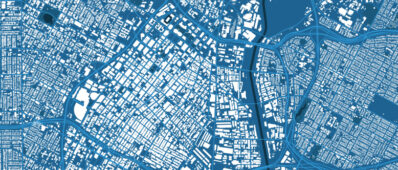
The dissertation examines the spatial patterns of employment and worker residences with three urban density functions: monocentric, polycentric, and omnicentric. Analysis of the 1980 journey-to-work census data for the Los Angeles region reveals that the polycentric density functions statistically predict the actual distributions better than the monocentric density functions. It further shows that the omnicentric density function best predicts the distribution of worker residences. These findings suggest that polycentricity of spatial structure exists in large urban areas, and implies that accessibility to the general employment opportunities is the primary determinant in the residential location choices. The research also investigates urban commuting behavior by estimating the minimum average commute required by these three models. The results show that different urban forms require different amounts of minimum commuting. The standard monocentric model requires a small amount of commute–about one-tenth of the actual commute. The polycentric model predicts the actual commute much better than the monocentric model. Its required commute is about two-fifths of the actual commute, indicating that polycentricity has a positive effect on the estimate of required commute. The omnicentric model best explains the actual commuting patterns among the three models. Its required commute accounts for about 45 percent of the actual commute. These empirical results lead to the conclusion that an urban model better predicting the actual spatial patterns also better explains the actual commuting behavior. This conclusion helps to preserve the assumption that urban workers make attempts to economize on commuting in their location choices. This assumption is implicit in all the three models and implies a positive relationship between the fit of an urban model in explaining the actual distributions and the ability to predict the actual commute. The finding, the standard monocentric model is very poor at explaining the observed urban commute in a major metropolitan area, is more an indictment of the monocentricity assumption than a rejection of the assumption on the commuting behavior. The standard monocentric model greatly underpredicts the actual urban commute because it inadequately represents the actual spatial structure in large metropolitan areas. Relaxing the monocentricity assumption yields better prediction of actual commuting behavior.


Suggested Citation
Shunfeng Song (1992) Spatial structure and urban commuting. PhD Dissertation. UC Irvine. Available at: https://uci.primo.exlibrisgroup.com/permalink/01CDL_IRV_INST/1go3t9q/alma991035093288404701.

working paper

Institutional Innovation and Infrastructure Investment: An Evaluation of the Turnpike System in Eighteenth Century England

Publication Date

November 26, 2003

Author(s)

Working Paper

UCI-ITS-WP-03-6

Areas of Expertise

Abstract

This paper investigates whether turnpike trusts increased road infrastructure spending in eighteenth century England. A turnpike trust was a non-profit organization that financed road improvements by levying tolls and issuing debt. They replaced the authority of parishes and townships, which financed road improvements using local property taxes. The paper uses a new data set to show that the turnpike system substantially increased road expenditure. It also introduces supporting evidence from a ‘natural’ experiment, in which roads remained under the authority of parishes and townships, because petitions to create a turnpike trust failed to receive passage from Parliament.

Suggested Citation
Dan Bogart (2003) Institutional Innovation and Infrastructure Investment: An Evaluation of the Turnpike System in Eighteenth Century England. Working Paper UCI-ITS-WP-03-6. Institute of Transportation Studies, Irvine. Available at: https://escholarship.org/uc/item/75k776hn.

research report

Enhancements of ATMIS Using Artificial Intelligence

Abstract

PARAMICS is one of the widely used microscopic traffic simulation program. One important feature of PARAMICSis that PARAMICS allows the user to customize many features of underlying simulation model through a Functional Interface or Application Programming Interface (API). We have developed a library of plug-in modules to enhance the capabilities of PARAMICS simulation through API. These API modules include actuated signal control, time-based ramp meter control, path-based routing, loop data aggregator, performance measures, MYSQL database connection, and network communication through CORBA, etc. With these functionality enhancements, PARAMICS simulation could be customizedto test and evaluate various ITS applications.

Suggested Citation
Henry X. Liu and Will Recker (2002) Enhancements of ATMIS Using Artificial Intelligence. Final Report UCB-ITS-PRR-2002-30. Institute of Transportation Studies, Irvine. Available at: https://escholarship.org/uc/item/3fh194sj.

published journal article

An ordinal multivariate analysis of accident counts as functions of traffic approach volumes at intersections

Accident Analysis & Prevention

Publication Date

October 1, 1988

Author(s)

Thomas Golob, Bolie Ruhl, Henk Meurs, Leo J. G. van Wissen
Suggested Citation
Thomas F. Golob, Bolie Ruhl, Henk Meurs and Leo van Wissen (1988) “An ordinal multivariate analysis of accident counts as functions of traffic approach volumes at intersections”, Accident Analysis & Prevention, 20(5), pp. 335–355. Available at: 10.1016/0001-4575(88)90017-6.

Phd Dissertation

ReMuLAA - A new algorithm for the route choice problem

Publication Date

March 15, 2014

Author(s)

Abstract

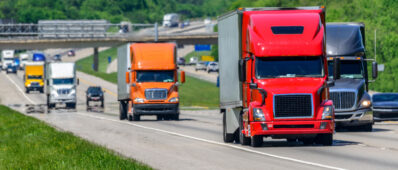
A new framework for analyzing the choice set formation for route choice models in transportation networks is presented and an algorithm is proposed. The algorithm is tested against a sample of GPS data for heavy trucks for the State of California. The results are presented in detail along with an analysis of both their qualitative and quantitative merits. A new algorithm for the route choice problem is also presented and its results analyzed against the state of the practice and state of the art. This new algorithm, ReMuLAA, is also the first known closed solution algorithm for the route choice problem using the Multinomial Logit Model (MNL) for an entire class of networks (Directed Acyclic Networks) without explicit route enumeration. A correction for the MNL model to account for route overlapping is also presented and the results are compared with other state-of-the-art route choice algorithms. The results of the application of ReMuLAA in a real world model are also presented and its advantages discussed.

Suggested Citation
PEDRO VEIGA DE CAMARGO (2014) ReMuLAA - A new algorithm for the route choice problem. PhD Dissertation. UC Irvine. Available at: https://uci.primo.exlibrisgroup.com/permalink/01CDL_IRV_INST/17uq3m8/alma991000154629704701.

working paper

Real Costs of Transportation and Influence of Pricing Policies

Publication Date

August 1, 1993

Associated Project

Author(s)

Working Paper

UCI-ITS-WP-93-7, UCTC 187

Areas of Expertise

Abstract

Sustainability of transportation depends on both behavior and technology. Behavior determines how much of various activities are undertaken; technology determines whether they are harmful to the environment. Policies can influence both: they provide behavior incentives, and they affect technological choices and guide technological change.

Suggested Citation
Kenneth A. Small (1993) Real Costs of Transportation and Influence of Pricing Policies. Working Paper UCI-ITS-WP-93-7, UCTC 187. Institute of Transportation Studies, Irvine. Available at: https://escholarship.org/uc/item/2mk2f7h2.

published journal article

Home ownership and social inequality in comparative perspective

Contemporary sociology

Publication Date

September 1, 2006

Author(s)

Suggested Citation
Victoria Basolo (2006) “Home ownership and social inequality in comparative perspective”, Contemporary sociology, 35(5), pp. 467–468. Available at: 10.1177/009430610603500508.

research report

Field Investigation of Advanced Vehicle Reidentification Techniques and Detector Technologies - Phase 2

Abstract

This report presents the results of Phase 2 of a multi-year research effort on “Field Investigation of Advanced Vehicle Reidentification Techniques and Detector Technologies.” Phase I of this research was conducted under PATH MOU 3008. Phases I and II of this research extended previous PATH research by the authors on MOU 336 “Section-Related Measures of Traffic System Performance: Prototype Field Implementation.” Phase II of this research continued development, field investigation and assessment of the latest technologies available for traffic detection and surveillance, for collecting more accurate traffic characteristics and traffic data necessary for Intelligent Transportation Systems (ITS) applications. The focus of Phase II of this research was to utilize fully instrumented freeway and signalized intersection sites in the California Advanced Transportation Management Systems Testbed in Southern California for field investigation of several emerging traffic sensor and detector technologies for vehicle reidentification (REID) purposes and real-time traffic performance measurement. As part of this project, a traffic detector and surveillance sub-testbed (TDS 2) on North I-405 in Irvine became operational in August 2002, and the ability to perform REID-based real-time traffic performance measurement in TDS 2, developed as part of this research, and including section travel times, traffic origins and destinations, and vehicle classification, was demonstrated on-line at the PATH Annual Meeting in October 2002. The very encouraging results obtained to date by developing and applying a vehicle reidentification approach for real-time traffic performance measurement suggest that further development, implementation and testing of this approach would clearly be of value.

Suggested Citation
Steven Ritchie, Seri Park, Cheol Oh, Shin-Ting Jeng and Andre Tok (2005) Field Investigation of Advanced Vehicle Reidentification Techniques and Detector Technologies - Phase 2. Final Report UCB-ITS-PRR-2005-8. Institute of Transportation Studies, Irvine, p. 72p. Available at: https://escholarship.org/uc/item/3jq8609j.

published journal article

Instantaneous information propagation in free flow, synchronized flow, stop-and-go waves in a cellular automaton model

Chinese Physics B

Publication Date

March 1, 2008

Author(s)

Rui Jiang, Wenlong Jin, Qing-Song
Suggested Citation
Rui Jiang, Wen-Long Jin and Qing-Song (2008) “Instantaneous information propagation in free flow, synchronized flow, stop-and-go waves in a cellular automaton model”, Chinese Physics B, 17(3), pp. 829–835. Available at: 10.1088/1674-1056/17/3/017.

published journal article

The determinants of residential succession

Journal of Urban Economics

Publication Date

January 1, 1977

Author(s)

Suggested Citation
Jan Brueckner (1977) “The determinants of residential succession”, Journal of Urban Economics, 4(1), pp. 45–59. Available at: 10.1016/0094-1190(77)90029-8.